🏙️ Introduction: The Skin of the City
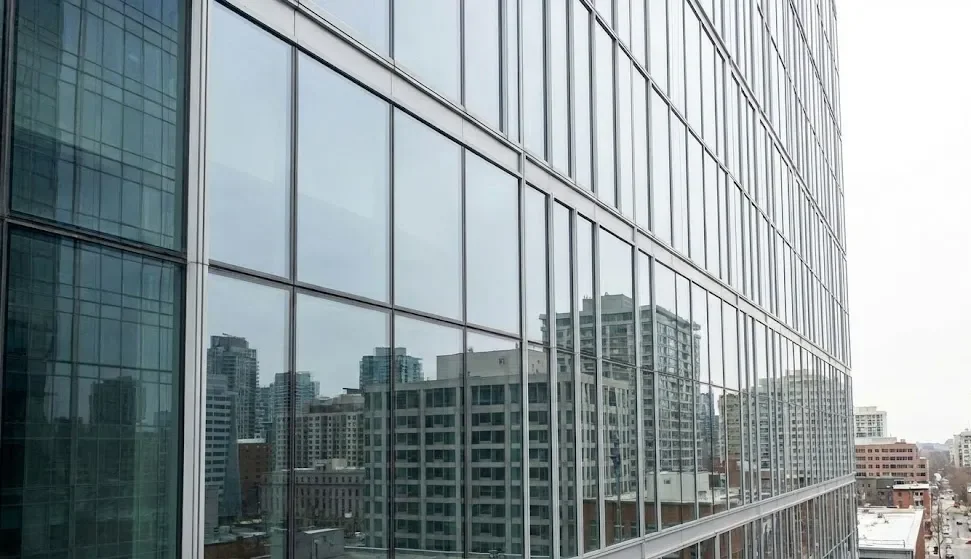
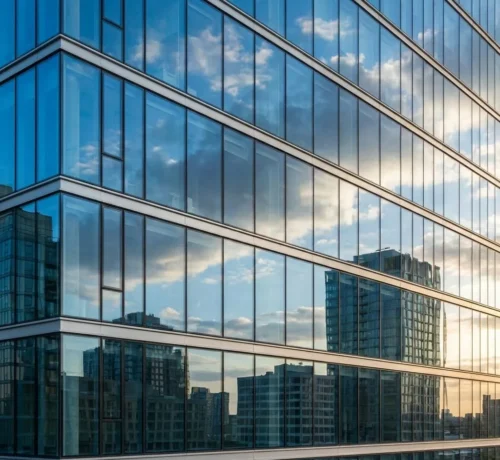
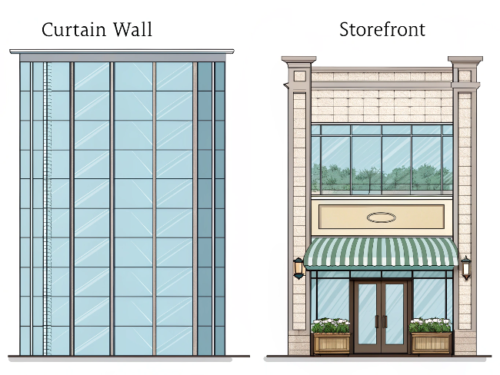
In cities, you might often see buildings with gleaming, mirror-like surfaces that reflect the sky. This type of “skin” is technically known as a curtain wall system.
For architects, developers, and project managers, understanding the curtain wall definition and its intricate details is not just about aesthetics—it is about mastering the building’s defense against the elements. Whether you are designing a high-rise hotel or a commercial complex, the choice of your building envelope solutions will dictate your project’s longevity, energy efficiency, and cost.
In this comprehensive guide, we will move beyond textbook definitions. We will combine 17 years of factory-floor experience with the latest market data to help you navigate the complex world of curtain walls, from what is curtain wall systems to selecting the right curtain wall manufacturer in China.
🏗️ What is a curtain wall in construction?
A curtain wall system is a non-structural outer covering of a building, usually made of lightweight aluminum profiles and glass, designed to protect the interior from elements like rain and wind. Because it is non-structural, it only carries its own dead load and transfers wind loads to the main building structure, offering a modern aesthetic and superior thermal efficiency.
Unlike a load-bearing wall, a curtain wall does not carry the floor or roof loads of the building. It acts as a filter, controlling air, water, and heat flow.
🏭 Factory Experience: Redefining the System
“In our factory, we have focused on aluminum alloy doors, windows, and curtain wall systems for over 17 years. From profile extrusion and surface treatment to system testing, everything is completed on our own production lines.
This hands-on experience has taught us that a curtain wall is not just a facade; it is a dynamic organ of the building. When clients ask us ‘what is a curtain wall,’ we don’t just show them a drawing. We explain it from a holistic system perspective: considering structural safety, drainage paths, thermal insulation, and soundproofing.”
🧩 What are the components of a curtain wall?
To understand how a curtain wall facade functions, we must dissect it. A high-performance system is an assembly of precision-engineered parts working in unison.
1. The Skeleton: Aluminum Curtain Wall Profile
The frame is typically made of extruded aluminum. Why aluminum? It offers an incredible strength-to-weight ratio. For modern energy standards, a thermal break curtain wall profile is essential. This involves a polyamide bar inserted between the interior and exterior aluminum profiles to stop heat transfer.
2. The Shield: Glazing and Infill
While glass curtain wall details are the most common (using double or triple insulated glazing units), infills can also be metal composite panels, stone, or louvers.
3. The Muscles: Anchors and Connectors
These are the unseen heroes. Steel anchors attach the curtain wall system to the building’s concrete slabs, allowing for thermal expansion and movement without cracking the glass.
4. The Seal: Waterproofing Elements
This includes gaskets, sealants, and backing rods. Curtain wall waterproofing is the primary defense against rain penetration.
🏭 Factory Experience: The “Sample-First” Rule
“In our factory, we have a strict protocol: before mass production, we realistically construct all key components—frames, connectors, sealant, drainage holes, insulation materials, and backing rods—in a 1:1 scale visual mockup (VMU) or performance mockup (PMU).
We invite the owner and consultants to review it physically. We test the curtain wall installation process on the ground. This ‘sample-first’ process significantly reduces the risk of leakage and deformation during later construction.”
⚖️ What are the advantages and disadvantages of curtain walls?
Is a curtain wall system right for your project? Below is a quick comparison to help you evaluate the trade-offs.
| 特徴 | 利点 | Disadvantages |
|---|---|---|
| 美学 | Modern, sleek appearance with natural light. | Glare issues if glass is not chosen correctly. |
| 構造 | Lightweight, reduces load on the foundation. | Requires regular maintenance (sealant checks). |
| パフォーマンス | Excellent waterproofing and wind resistance. | Higher initial installation cost than standard walls. |
📊 Market Insight
According to the report “Curtain Walls Market Size and Forecast 2025–2034” released by the international market research institution Precedence Research, the global curtain wall market size was approximately US$ 51 billion in 2024 and is expected to nearly double by 2034.
The report highlights that unitized curtain wall systems accounted for over 60% of revenue, indicating that high-performance curtain walls have transformed from a “special choice” into a mainstream facade solution.
🏙️ What types of curtain walls are available?
Selecting the right facade is a balance between aesthetic vision, structural requirements, and budget constraints. Based on fabrication methods and visual appearance, here are the primary systems defining modern skylines.
📋 Top 5 Types of Curtain Wall Systems
- Unitized Curtain Wall: Factory-assembled panels for rapid, high-rise installation.
- Spider-web Curtain Wall: Frameless glass with point-fixings for maximum transparency.
- Visible Frame Curtain Wall: Traditional systems with exposed aluminum caps for linear aesthetics.
- 隠しフレームカーテンウォール: Structural glazing with no visible external metal, creating a seamless glass skin.
- Exterior Louver Curtain Wall: Integrated sun-shading systems for enhanced energy efficiency.
1. Unitized Curtain Wall System
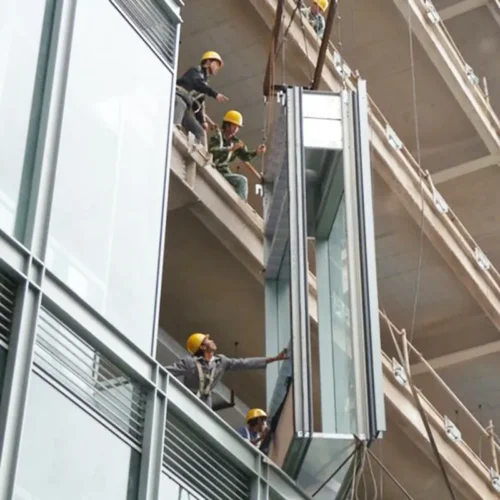
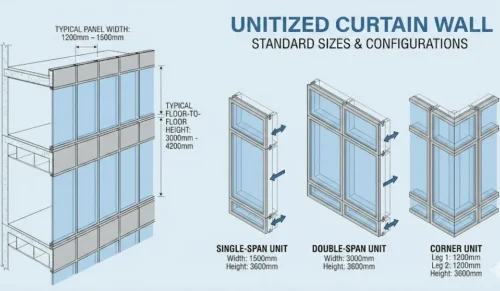
This is the dominant choice for skyscrapers. Unlike traditional methods, the unitized curtain wall system consists of large, pre-assembled panels (glazing and frames combined) that are manufactured in a controlled factory environment.
🏭 Factory Insight
Because silicone sealants are applied in the factory rather than on a dusty construction site, the waterproofing quality is significantly higher.
Best For: Fast-track high-rise projects where installation speed is critical.
2. Spider-web Curtain Wall (Point-Fixed)
Often seen in grand lobbies, the spider glass curtain wall abandons bulky frames. It relies on stainless steel “spider” fittings and articulated bolts to support the glass, transferring loads to a backup structure (steel columns or glass fins).
Design Note: It creates the illusion of a floating wall, maximizing light transmission and transparency.
3. Visible Frame Curtain Wall
Also known as a “capped” system, this is a classic stick built curtain wall variation. The glass is mechanically held in place by a pressure plate, which is then covered by a decorative aluminum face cap.
美的: The visible vertical and horizontal lines create a rhythmic grid pattern on the building’s facade.
4. Hidden Frame Curtain Wall
For a sleek, monolithic appearance, architects prefer the Hidden (or Invisible) Frame. In these structural glazing systems, the glass is bonded to the aluminum frame using high-strength structural silicone. From the outside, you see only a continuous sheet of glass with narrow sealant joints, as the metal frame is concealed behind the glazing.
5. Exterior Louver Curtain Wall System
As energy codes become stricter, this system integrates shading devices directly into the facade. Aluminum aerofoils or glass louvers are attached to the main curtain wall frame.
Function: It effectively blocks harsh sunlight before it hits the glass, significantly reducing cooling loads while adding depth and texture to the building’s envelope.
🎯 What are the Applicable scopes of curtain walls?
Where does a curtain wall system truly belong? While most people associate them with skyscrapers, as a manufacturer, we see our systems deployed across a vast spectrum of architecture. Every building type presents a unique challenge that the facade must solve.
1. Hospitals
In modern healthcare design, the facade is part of the healing process. Hospitals prioritize building envelope solutions that maximize natural daylight, which has been proven to accelerate patient recovery.
Key Requirement: High thermal insulation is critical here to maintain a stable interior temperature for sensitive medical equipment and patient comfort, regardless of the weather outside.
2. Universities
From research centers to campus libraries, educational institutions use curtain walls to create open, inspiring learning environments.
Design Focus: Universities often demand a blend of aesthetics and energy efficiency. We often supply visible frame curtain walls here to match the academic rigor and linear architectural styles typical of campus master plans.
3. Airports or Train Stations
These are the gateways to a city. The sheer scale of these transport hubs requires high-rise building facade technology applied horizontally.
Structural Challenge: These structures require massive spans of glass to create unobstructed views. The curtain wall must be engineered to withstand specific stresses, such as the vibration from trains or the wind loads on wide, open tarmacs.
4. Commercial Buildings or Shopping Malls
For retail, the facade is the salesman. A highly transparent spider glass curtain wall is often the top choice for mall atriums and storefronts.
Commercial Value: It blurs the line between the street and the shop, inviting foot traffic inside. For office towers, a sleek unitized system projects an image of corporate stability and modernity.
5. High-rise Hotels or Apartments
In residential and hospitality projects, the priority shifts to the occupant’s experience—specifically, silence and safety.
Performance Need: The system must offer exceptional acoustic attenuation to block out city noise. Furthermore, watertightness is non-negotiable to prevent mold and water damage in luxury interiors.
🌴 Project Case: The Manila Bay Challenge
“Remember our curtain wall project in the Philippines a few years ago? It was a high-rise hotel on the Manila Bay, a coastal location with extremely harsh conditions including salt spray and typhoons.
The client initially only considered conventional glass curtain walls. Through wind pressure calculations and salt spray tests, we recommended using unitized glass curtain walls on the windward side and adding external sunshade louvers to the west-facing facade.
The Result: The hotel maintained excellent airtightness and watertightness during the severe typhoon of 2022, and the solar heat gain from the west-facing guest rooms was significantly reduced. Annual air conditioning energy consumption was reduced by approximately 12% compared to the original estimate.”
6. Government Buildings or Stadiums
These are landmark structures meant to stand for generations. Stadiums, in particular, often feature complex, curved geometries that challenge standard fabrication.
The Solution: We often utilize stick built curtain wall systems or custom unitized panels here to accommodate the irregular shapes and curves (twist) required by bold architectural designs, ensuring the building becomes a recognizable icon.
🔍 How to choose a high-quality curtain wall Manufacturer?
Selecting a supplier for curtain wall manufacturer china or globally is a high-stakes decision. Here is a step-by-step guide to vetting them:
📋 Step-by-Step Vetting Guide
- Verify Production Capacity: Can they handle your project’s scale? Ask for their annual square meter output.
- Check Testing Facilities: Do they have an in-house laboratory for water penetration and air infiltration testing? A manufacturer who tests internally is confident in their quality.
- Ask for Project References: Don’t just look at photos. Ask for contacts of previous clients, specifically in your region (to check how their product handles your local climate).
- Assess System Versatility: Can they produce custom curtain wall details? Or do they only offer standard catalogs?
- Review Certifications: Look for compliance with ASTM (American), BS (British), or AS/NZS (Australian) standards depending on your location.
For a curated list of industry leaders, verify our guide on the [Internal Link: Top 10 Curtain Wall Manufacturers in China].
🚀 Are you ready to choose a good curtain wall manufacturer for your project?
The curtain wall system is more than just glass and aluminum; it is the barrier that defines the comfort, safety, and efficiency of your building. Whether you opt for a sleek unitized curtain wall system for a skyscraper or a spider glass curtain wall for a showroom, the success lies in the details.
From understanding the basic curtain wall definition to analyzing the curtain wall cost per square meter, every decision matters. By leveraging factory expertise and rigorous testing (like our Manila Bay example), you ensure your investment stands the test of time.
Next Step
Are you currently planning a facade project? Contact our team for a free consultation on curtain wall design and pricing tailored to your specific building requirements.
❓ FAQ (Frequently Asked Questions)
What is the difference between curtain wall vs window wall?
あ カーテンウォール is attached to the outside of the floor slabs and acts as a continuous cover, creating a seamless look. A 窓壁 sits between the floor and ceiling slabs, breaking the glass line at every floor. Window walls are generally cheaper but offer less design continuity.
How much does a curtain wall cost per square meter?
の curtain wall cost per square meter varies wildly based on system type and glass spec. Generally, it ranges from $150 to $400+. Unitized systems have higher upfront material costs but lower labor costs compared to stick systems.
What is a thermal break curtain wall?
[Image of thermally broken aluminum window profile cross section]
It is a system where the exterior and interior aluminum profiles are separated by a plastic (polyamide) barrier. This prevents conductive heat loss, essential for energy efficiency in cold or hot climates.
Can curtain walls be used for residential houses?
Yes. While traditionally commercial, modern residential designs use curtain wall facades to create “glass houses” with floor-to-ceiling views.
How do you maintain curtain wall waterproofing?
Routine inspections are key. Every 5-10 years, check the silicone sealants and gaskets (the rubber strips between glass and frame). If they dry out or crack, water can penetrate.


![gray door with silver handle sign that says no - Are Aluminum Doors Better Than Upvc? [12月 2025] - APRO 灰色のドアに銀色の取っ手と「No」のサイン](https://aprowin.com/wp-content/uploads/2024/09/gray-door-with-silver-handle-sign-that-says-no-500x280.webp)
![リビングルームのプールサイドビューに開くガラスのスライドドア - ドアの費用はいくらですか? ドアの取り付けガイド [2025] - APRO リビングルームのプールサイドの景色が見えるガラスの引き戸](https://aprowin.com/wp-content/uploads/2024/11/Sliding-glass-doors-opening-to-a-poolside-view-in-a-living-room-500x328.webp)