

🏢Introduction
When architects and developers embark on the design of a modern commercial building, one of the most critical structural and aesthetic decisions they face is selecting the best curtain wall material for the building facade.
The envelope of a building is its first line of defense against the elements and its primary visual identity. In this comprehensive guide, we will conduct a deep curtain wall material comparison, specifically analyzing aluminum vs steel curtain wall systems.
Which is better for high-rise buildings: aluminum or steel curtain walls? When should I choose steel curtain wall framing instead of aluminum?
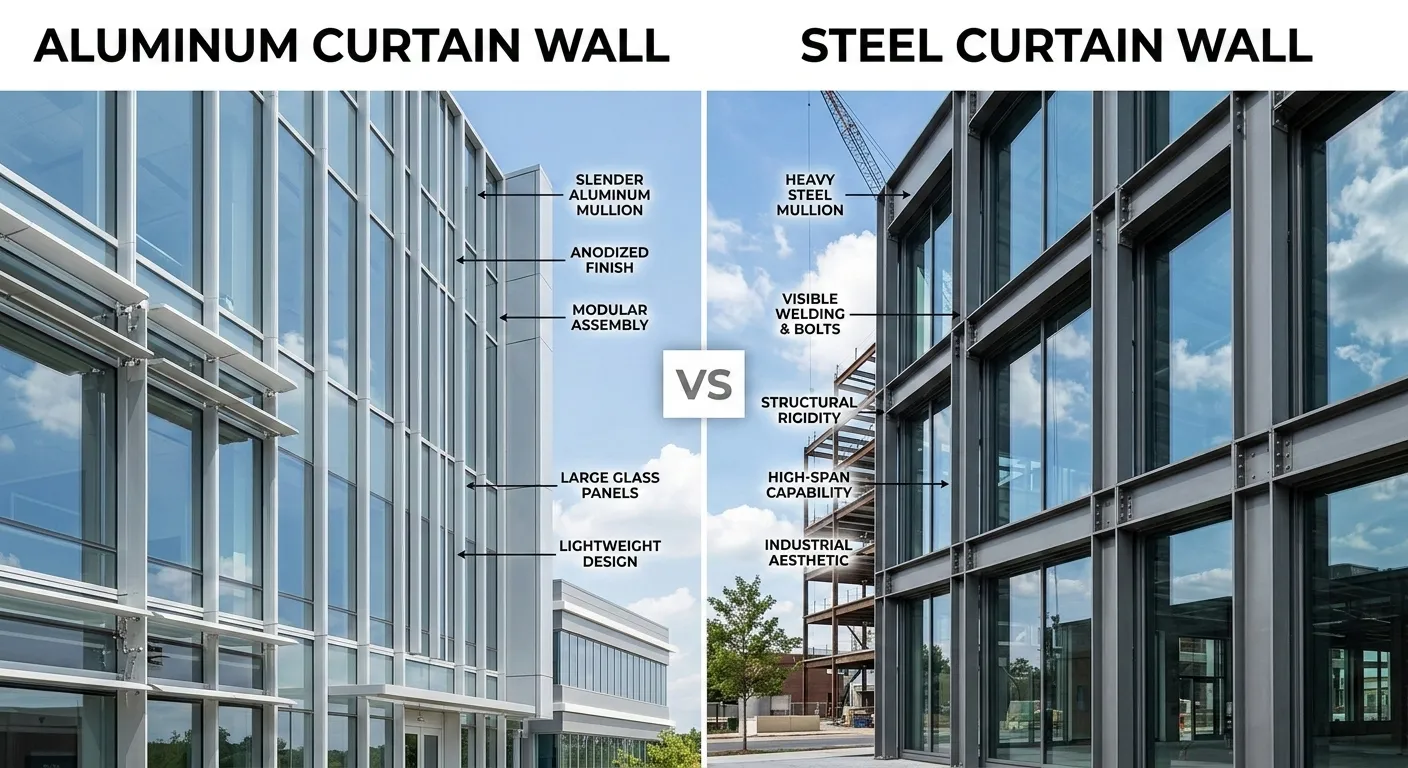
These are the exact questions we tackle daily on the manufacturing floor and in engineering meetings. Both materials offer distinct advantages, but their structural, thermal, and aesthetic properties dictate completely different use cases.
By understanding the aluminum alloy curtain wall advantages alongside the steel curtain wall advantages, you can make an informed, data-driven decision for your next architectural project.
🏢What is an Aluminum Alloy Curtain Wall?
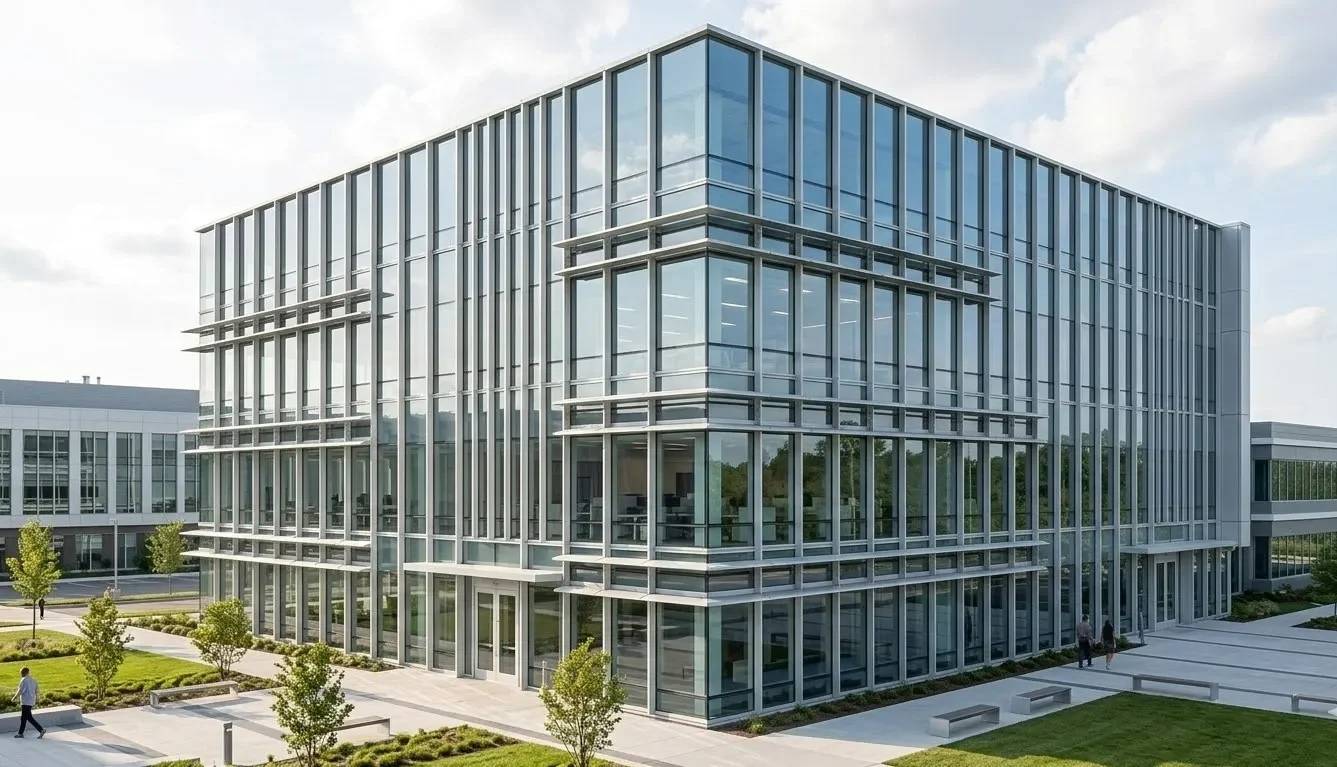
An aluminum curtain wall system is a non-load-bearing exterior building envelope made from lightweight extruded aluminum profiles. These profiles form the grid (the aluminum curtain wall framing or aluminum mullion) that holds glass, metal panels, or stone veneer.
The industry relies heavily on 6063-T5 and 6061 aluminum alloy grades because they can be easily extruded into complex shapes. This allows manufacturers to design intricate interlocking profiles for either a unitized (pre-assembled in the factory) or a stick-built curtain wall (assembled on-site). Furthermore, modern systems utilize thermal break aluminum profiles—where a polyamide strip separates the exterior and interior aluminum extrusions—to prevent heat transfer. The surface is then treated with anodized aluminum finishes or a highly durable PVDF coating to withstand decades of weather exposure.
Advantages of Aluminum Alloy Curtain Walls
The dominance of aluminum in the facade industry is no accident. It offers a highly compelling suite of benefits:
- Lightweight Curtain Wall Framing: Aluminum is approximately one-third the weight of steel. This drastically reduces the dead load on the building’s primary structural frame, allowing for lighter, more cost-effective concrete or steel superstructures.
- Corrosion Resistance Aluminum: When exposed to air, aluminum naturally forms a microscopic oxide layer that protects it from further rusting. Combined with advanced factory coatings, it is practically immune to standard environmental degradation.
- Fast Fabrication and Installation: Because aluminum is highly malleable and easy to cut, punch, and machine, fabrication is incredibly rapid. For unitized systems, the installation speed on-site is unmatched.
- Mature Supply Chain: There is a globally proven curtain wall system network. Sourcing extrusions, gaskets, and hardware is straightforward, ensuring project timelines are met with minimal supply risk.
- Thermal Break Performance (Aluminum): With modern polyamide struts integrated into the extrusions, aluminum systems can achieve phenomenal energy efficiency, easily meeting stringent global energy codes.
Disadvantages of Aluminum Alloy Curtain Walls
Despite its widespread use, aluminum has inherent limitations rooted in its material physics:
- Lower Stiffness Than Steel: Aluminum has a much lower modulus of elasticity compared to steel. This means that under heavy wind loads, aluminum will bend (deflect) much more than a steel profile of the same size.
- Deflection Control Limitations: Because of this lower stiffness, if you need to span a very tall opening (like a two-story lobby), an aluminum mullion must be extremely deep and bulky to prevent the glass from breaking under wind pressure.
- Thermal Expansion Aluminum: Aluminum expands and contracts with temperature changes at a rate roughly twice that of steel. Engineers must design complex expansion joints into the facade to accommodate this movement, which complicates the system.
- Fire Performance Requirements: Aluminum melts at a relatively low temperature (around 660°C or 1220°F). Therefore, intricate fire-stopping details and specific engineering are required between floor slabs to prevent the spread of fire.
What Scenarios are Aluminum Alloy Curtain Walls Suitable For?
Based on our extensive engineering experience, aluminum is the optimal choice in several specific scenarios:
- Standard Facade Design: When a building has repetitive modules and standard floor-to-floor heights, a unitized aluminum system is the most efficient and economical choice.
- High-Rise Aluminum Curtain Wall: The lightweight nature of aluminum makes it the absolute standard for towering skyscrapers, significantly reducing the load on the foundation.
- Coastal Building Curtain Wall Material: Due to its inherent resistance to rust, heavily coated aluminum performs exceptionally well in salty, humid coastal environments.
- Faster Lead Time Curtain Wall: If your project is on a tight schedule, the mature supply chain and rapid extrusion processes of aluminum guarantee faster delivery.
- Cost-Effective Curtain Wall System: For standard applications, aluminum offers the best balance of performance and price on the market.
🔩What is a Steel Curtain Wall?
A steel curtain wall definition centers on raw structural power. A steel-framed curtain wall utilizes steel profiles—often hot-rolled, cold-formed, or laser-welded—to create the structural grid. The steel mullion and steel transom are engineered to carry massive loads over extreme spans that would be impossible for aluminum without becoming visually obtrusive.
Because steel is incredibly strong, it allows for high strength-to-size framing. Architects love steel because it enables ultra-slim sightlines; the framing can be incredibly narrow while still supporting massive, heavy panels of triple-glazed or oversized glass. However, raw steel rusts. Therefore, a modern steel facade requires hot-dip galvanized steel cores or the use of solid stainless steel curtain wall framing. To ensure longevity, these systems are finished with a high-performance coating system designed specifically for extreme weather endurance.
Advantages of Steel Curtain Walls
When an architect demands the extraordinary, steel is usually the answer:
- High Structural Strength and High Stiffness: Steel’s modulus of elasticity is roughly three times that of aluminum. It simply does not bend easily.
- Long Span Curtain Wall Framing: Steel can span multiple floors—often 20 feet or more—without requiring intermediate structural supports or massive, deep mullions.
- Minimal Deflection Facade: Because it is so rigid, a steel facade protects the glazing seals and the glass itself by resisting bowing under severe wind loads.
- Ultra-Slim Mullions: For designs that prioritize maximum transparency and glass area, steel provides the slender profiles that architects crave.
- Custom Facade Detailing: Steel can be laser-cut, welded, and sculpted into bespoke curtain wall engineering masterpieces that standard aluminum extrusions cannot replicate.
Disadvantages of Steel Curtain Walls
The power of steel comes with significant logistical and technical challenges:
- Corrosion Protection Steel: If the high-performance coating is scratched or fails, steel will rust. This can compromise structural integrity and cause ugly staining on the building facade.
- Higher Maintenance Risk: In humid or coastal areas, maintaining the protective coatings requires strict oversight and regular inspections.
- Heavier Weight Installation: Steel is heavy. Lifting and installing long-span steel mullions requires heavy-duty cranes, reinforced floor slabs, and highly skilled installation crews.
- Longer Lead Time Fabrication: Precision welding, grinding, galvanizing, and painting steel framing takes considerably longer than extruding aluminum.
- Higher Cost: When factoring in the raw material, specialized fabrication, heavy logistics, and premium coating applications, steel systems are significantly more expensive.
What Scenarios are Steel Curtain Walls Suitable For?
Steel shines in bespoke, monumental architectural features:
- Large-Span Facade / Oversized Glass Panels: When the design calls for massive, uninterrupted panes of glass (often seen in luxury retail flagships or grand lobbies).
- Iconic Architectural Facade: For highly customized, geometrically complex structures where standard do not apply.
- High Wind Load Curtain Wall: In regions prone to hurricanes or severe wind events, steel provides the necessary minimal deflection facade.
- Slim Sightline Design: When the architect demands a minimalist aesthetic with minimal mullion depth obstructing the view.
🔑Key Differences
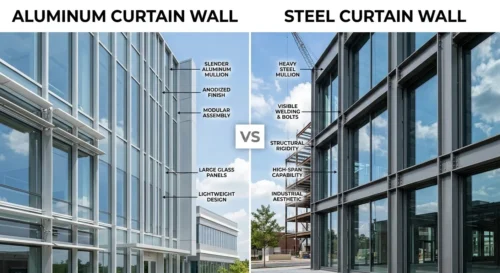
To truly grasp the engineering choices, we must compare these materials head-to-head. Key differences between aluminum alloy curtain walls and steel curtain walls span every aspect of the project lifecycle, from aesthetic vision to long-term maintenance.
| Category | Aluminum Alloy Curtain Wall | Steel Curtain Wall |
|---|---|---|
| Appearance | Clean, sharp extruded profiles. Wide finish options (anodized, PVDF colors). Deeper mullions required for tall spans. | Extremely slim sightlines (often ~2 inches). Superior rigidity allows minimal visual obstruction. Highly customizable welded geometries. |
| Structural Strength | Good tensile strength but 1/3 the stiffness of steel. Requires deeper mullions to meet deflection limits (e.g., L/200 under wind load). | Exceptional stiffness. Ideal for long-span mullions and heavy glazing (blast-resistant, bulletproof). Minimal deflection under high wind loads. |
| Thermal Performance | High conductivity, but modern thermal break systems (polyamide strips) provide excellent insulation. Can achieve Passive House-level U-values. | Lower conductivity than aluminum but still requires thermal breaks (EPDM, fiberglass isolators). Insulation detailing critical at connections. |
| Corrosion Resistance | Naturally forms protective oxide layer. Anodizing or PVDF coatings provide strong long-term durability. Low maintenance. | Vulnerable to rust. Requires galvanizing + multi-layer coating system. Galvanic corrosion must be carefully managed. |
| Sustainability | Infinitely recyclable. Recycling uses ~5% of primary production energy. Lightweight reduces transport emissions. | Highly recyclable but heavier. Hot-dip galvanizing and transportation increase embodied carbon. |
| Installation Complexity | Lightweight. Ideal for unitized systems. Fast crane installation with smaller crews. Factory-assembled panels improve quality control. | Heavy. Typically stick-built. Requires welding/bolting on site. More scaffolding, lifting equipment, and longer installation time. |
| Manufacturing Cost | Generally most cost-effective option for mid-to-high-rise buildings. Lower shipping and labor costs. | Premium solution. Higher fabrication, coating, and installation costs. Selected for performance and aesthetics. |
| Maintenance | Routine cleaning and sealant inspection. Minimal long-term structural concerns. | Requires active monitoring of coating integrity. Rust repair at height can be complex and costly. |
Appearance
Aluminum Alloy Curtain Wall:
The aesthetic of an aluminum system is defined by its finish and its depth. Because aluminum extrusions are pushed through a die, we can create incredibly sharp, clean lines. You have access to a vast array of finish options aluminum, from the metallic sheen of anodized surfaces to the limitless color palette of PVDF liquid paints. However, the architectural aesthetics curtain wall tradeoff is depth. If you are spanning a high floor height, the aluminum mullion must protrude deep into the interior space to maintain its structural integrity.
Steel Curtain Wall:
Steel is the master of the slim sightlines (steel advantage). Because it is so inherently stiff, an architect can design a towering glass wall with mullions that are barely two inches wide. This provides an almost invisible structural grid, maximizing natural light and visual transparency. Furthermore, steel offers unparalleled facade detailing flexibility. Instead of being limited to extruded shapes, steel can be laser-welded into sharp T-shapes, cross-shapes, or entirely bespoke geometries that create iconic architectural statements.
Structural Strength
Structural strength and stiffness vs strength in curtain wall framing is where these two materials truly diverge.
Aluminum Alloy Curtain Wall:
Aluminum has excellent tensile strength, but its modulus of elasticity (stiffness) is exactly one-third that of steel. Why does this matter? Deflection.
Industry Data Standard Citation:
According to the rigorous standards set by the industry, a standard curtain wall mullion is typically limited to a deflection of Length/175 under design wind load.
If wind hits a tall aluminum mullion, it will bow inward. If it bows too much, the glass will shatter, and the weather seals will fail. Therefore, to meet deflection limits curtain wall standards, aluminum profiles must be made deeper.
Steel Curtain Wall:
Steel’s exceptional stiffness makes it the undisputed champion of the long-span mullion. It simply refuses to bend under pressure. This immense wind load resistance facade capability means you can hang heavier glass (like bulletproof or bomb-blast resistant glazing) and span vast vertical distances without needing to anchor the mullion to a secondary steel structure behind it.
Thermal Performance
Aluminum Alloy Curtain Wall:
In the past, aluminum’s high thermal conductivity was a problem. Today, the thermal break curtain wall has revolutionized the industry.
Step-by-Step Factory Experience: Engineering the Thermal Break
Let me walk you through how we handle thermal bridging aluminum vs steel on our factory floor. We had a massive commercial project in the freezing climate of Harbin, China. The client demanded an ultra-low U-value curtain wall.
- Extrusion: First, we extruded the aluminum mullion into two separate pieces: an exterior “nose” and an interior “structural back.”
- Insertion: We placed these two aluminum halves into a specialized CNC rolling machine.
- The Bridge: We mechanically crimped a 34mm wide, glass-fiber-reinforced polyamide strip between the two aluminum pieces.
- The Result: This strip completely interrupted the transfer of cold air from the outside to the inside. By combining this deep thermal break with argon-filled triple glazing, we achieved a thermal performance that exceeded passive house standards, completely eliminating interior condensation.
Steel Curtain Wall:
Steel conducts heat at a much lower rate than aluminum (about 25% the conductivity). However, it is still a metal. Modern steel curtain walls also require thermal breaks, typically achieved by separating the exterior steel pressure plate from the interior structural steel mullion using high-density EPDM rubber or specialized structural fiberglass isolators. Perfecting the insulation detail at mullion connections is critical to prevent cold spots in steel systems.
Corrosion Resistance
Aluminum Alloy Curtain Wall:
Aluminum is a naturally “self-healing” metal. If you scratch an untreated piece of aluminum, the exposed metal instantly reacts with oxygen to form a microscopic, impenetrable layer of aluminum oxide, halting further corrosion. When we add heavy industrial anodizing or multi-coat fluoropolymer (PVDF) paints, aluminum becomes the ultimate low-maintenance champion.
Steel Curtain Wall:
Steel’s greatest enemy is moisture. A steel curtain wall requires a multi-layered defense system.
Step-by-Step Factory Experience: The Steel Coating Battle
We were contracted to build a 30-foot tall steel curtain wall lobby for a tech headquarters in a high-humidity coastal zone. The risk of rust was our primary concern. Here is how we engineered the solution to ensure maximum corrosion protection steel:
- Raw Fabrication: We laser-welded the custom steel profiles to exact tolerances.
- Hot-Dip Galvanizing: We submerged the massive steel mullions into a vat of molten zinc at 450°C (842°F). The zinc metallurgically bonds to the steel, creating a sacrificial rust-proof layer.
- Surface Preparation: Galvanized steel is notoriously difficult to paint. We manually “sweep blasted” the profiles using fine abrasive grit to create a micro-texture for the paint to grip.
- High-Performance Coating: We applied a zinc-rich epoxy primer, followed by a high-build polyurethane mid-coat, and finished with a UV-resistant fluoropolymer topcoat.
This painstaking process drastically increased the manufacturing timeline, but it resulted in a steel facade guaranteed against rust for 25 years.
Furthermore, engineers must be hyper-aware of galvanic corrosion (with steel contact).
Wikipedia Citation:
As explained by the principles of chemistry, when two dissimilar metals (like raw steel and aluminum) are in physical contact in the presence of an electrolyte (like rainwater), the more anodic metal (aluminum) will corrode rapidly. Therefore, we must rigorously use dielectric separators (like neoprene gaskets) whenever steel and aluminum components meet in a facade system.
Environmental and Sustainability
Aluminum Alloy Curtain Wall:
Aluminum is infinitely recyclable without losing any of its physical properties. Recycling aluminum requires only 5% of the energy used to produce the primary metal. The global supply chain for recycling architectural aluminum is incredibly robust.
Steel Curtain Wall:
Steel is also the most recycled material on the planet. However, the carbon footprint associated with transporting heavy steel mullions and the energy-intensive hot-dip galvanizing process makes the initial embodied energy of a steel curtain wall higher than a localized, lightweight aluminum system.
Installation Complexity
Aluminum Alloy Curtain Wall:
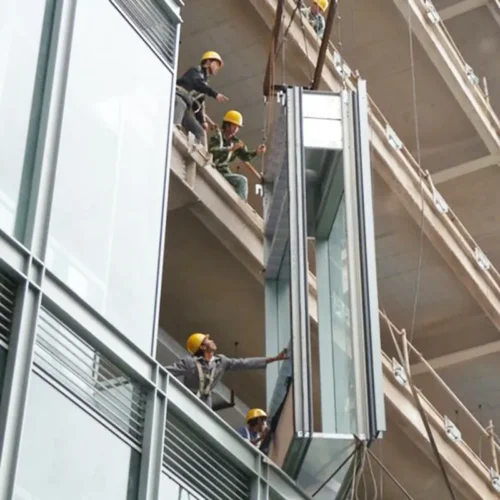
Aluminum systems, particularly unitized curtain walls, are the epitome of installation efficiency. Entire panels (framing, glass, and seals) are assembled in the factory environment. On-site, tower cranes lift these lightweight panels, and a small crew rapidly interlocks them onto pre-drilled floor anchors. It is a highly systematized, rapid process.
International Testing Standard Citation:
Before these systems ever reach the site, they are rigorously tested. We routinely subject our unitized aluminum mock-ups to extreme performance criteria. A massive airplane propeller blasts wind and water at the facade to ensure the interlocking aluminum joints do not leak under hurricane conditions.
Steel Curtain Wall:
Installing a bespoke steel facade is akin to heavy structural engineering. The mullions are incredibly heavy. They are usually installed as a stick-built system, meaning the vertical steel mullions are craned into place, bolted or welded to the main structure, and then the horizontal transoms, glass, and exterior pressure plates are installed piece-by-piece on site. This requires extensive scaffolding, specialized heavy-lifting equipment, and vastly more time on-site.
Industry Case Study Citation:
Look at the iconic diagrid structures, designed by Foster + Partners. Its distinctive diagonal grid (diagrid) facade heavily relies on massive steel framing. The installation of these complex, heavy steel nodes required unprecedented logistical planning and custom lifting rigs, showcasing both the majestic architectural potential and the immense installation complexity of steel-framed facades.
Manufacturing Cost
Aluminum Alloy Curtain Wall:
Due to the ease of extrusion, the lightweight nature reducing shipping costs, and the rapid unitized installation saving on expensive on-site labor, aluminum is the most cost-effective curtain wall system available for mid-to-high-rise commercial construction.
Steel Curtain Wall:
Steel represents a significant premium. The raw material may be comparable in price to aluminum, but the heavy fabrication, specialized laser welding, rigorous galvanizing, multi-stage painting, and heavy-duty installation labor drive the cost up exponentially. Steel is chosen for performance and aesthetic impact, not for budget savings.
Maintenance Difficulty
Aluminum Alloy Curtain Wall:
Maintenance is generally limited to routine facade cleaning (washing the glass and the aluminum extrusions with mild detergents) and periodic inspections of the structural silicone sealants.
Steel Curtain Wall:
While the glass and sealants require the same maintenance, the steel framing itself carries a higher maintenance risk. If the building is in a harsh environment, the facility management team must actively monitor the high-performance coating system for any scratches or chips. If the underlying steel is exposed to moisture, rust will begin. Remediation involves scaffolding, grinding away the rust, and applying localized touch-up coatings—a complex and expensive process at height.
💡Best Use Cases (Simple Recommendations)
When advising developers and lead architects at , we boil the decision down to absolute project priorities.
Choose Aluminum Alloy Curtain Walls if…
- You want balanced performance and faster delivery: The mature supply chain of aluminum systems ensures your project stays on schedule and on budget.
- The project is located in a coastal/humid region: The natural corrosion resistance aluminum provides ultimate peace of mind against salt air and moisture.
- You need excellent thermal performance with standard details: Thermal break aluminum profiles easily achieve top-tier energy ratings without re-engineering the wheel.
- You prefer a proven system with a wide range of suppliers: The ubiquity of aluminum means you have unparalleled access to replacement parts and technical expertise globally.
Choose Steel Curtain Walls if…
- You need ultra-slim mullions or incredibly large spans: When the architectural vision demands towering glass with virtually invisible framing.
- The design mandates maximum stiffness / minimal deflection: If you are building in a high-wind zone or supporting massive, heavy architectural glazing.
- The budget supports premium coatings or stainless steel solutions: You have the capital to invest in the specialized fabrication and heavy-duty corrosion protection steel requires.
- You are creating an iconic facade with highly customized bespoke detailing: Standard aluminum extrusions cannot match the sharp, laser-welded architectural geometry of a custom steel grid.
🏁Conclusion
The debate between Aluminum Alloy Curtain Walls vs Steel Curtain Walls is not about establishing an absolute winner; it is about architectural alignment.
The Aluminum Standard
Aluminum curtain wall framing remains the undisputed king of the commercial skyline. Its lightweight nature, incredible extrusion flexibility, inherent rust resistance, and cost-effectiveness make it the logical, high-performance choice for 90% of modern high-rises and standard commercial developments. It is a highly refined, engineered system that delivers predictability and efficiency.
The Steel Exception
Conversely, the steel curtain wall framing is the architect’s ace in the hole. It is reserved for the spectacular. When standard deflection limits are pushed to the absolute edge, when a grand lobby demands a 30-foot clear span of uninterrupted glass, or when the sightlines must be razor-thin, steel steps in where aluminum physically cannot.
Final Verdict
By carefully weighing the aluminum vs steel curtain wall advantages against your project’s specific wind loads, thermal targets, aesthetic vision, and financial parameters, you can engineer a facade that not only defines the building’s identity but endures the test of time.


 English
  Arabic
  German
  Spanish
  French
  Italian
  Japanese
  Korean
  Portuguese
  Russian