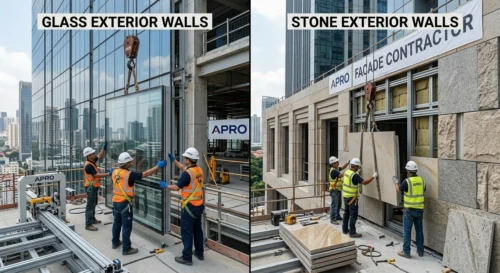

What is a Unitized Curtain Wall? Pros & Cons
Unitized curtain wall guide: meaning, pros/cons, details, performance, install steps, QA/QC, and sourcing checklist—based on APRO factory experience.

Explore our window wall collection for expansive views and seamless indoor-outdoor transitions, blending style with energy efficiency.
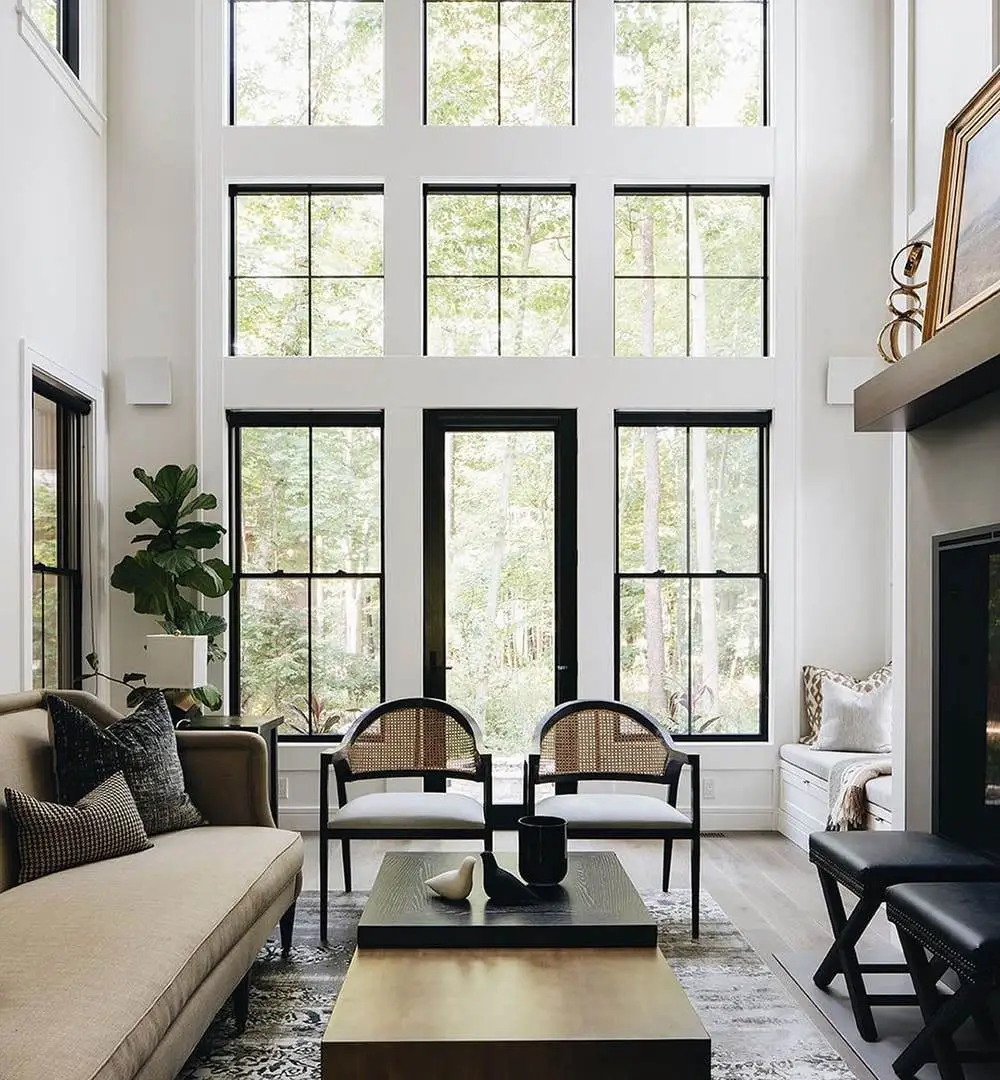
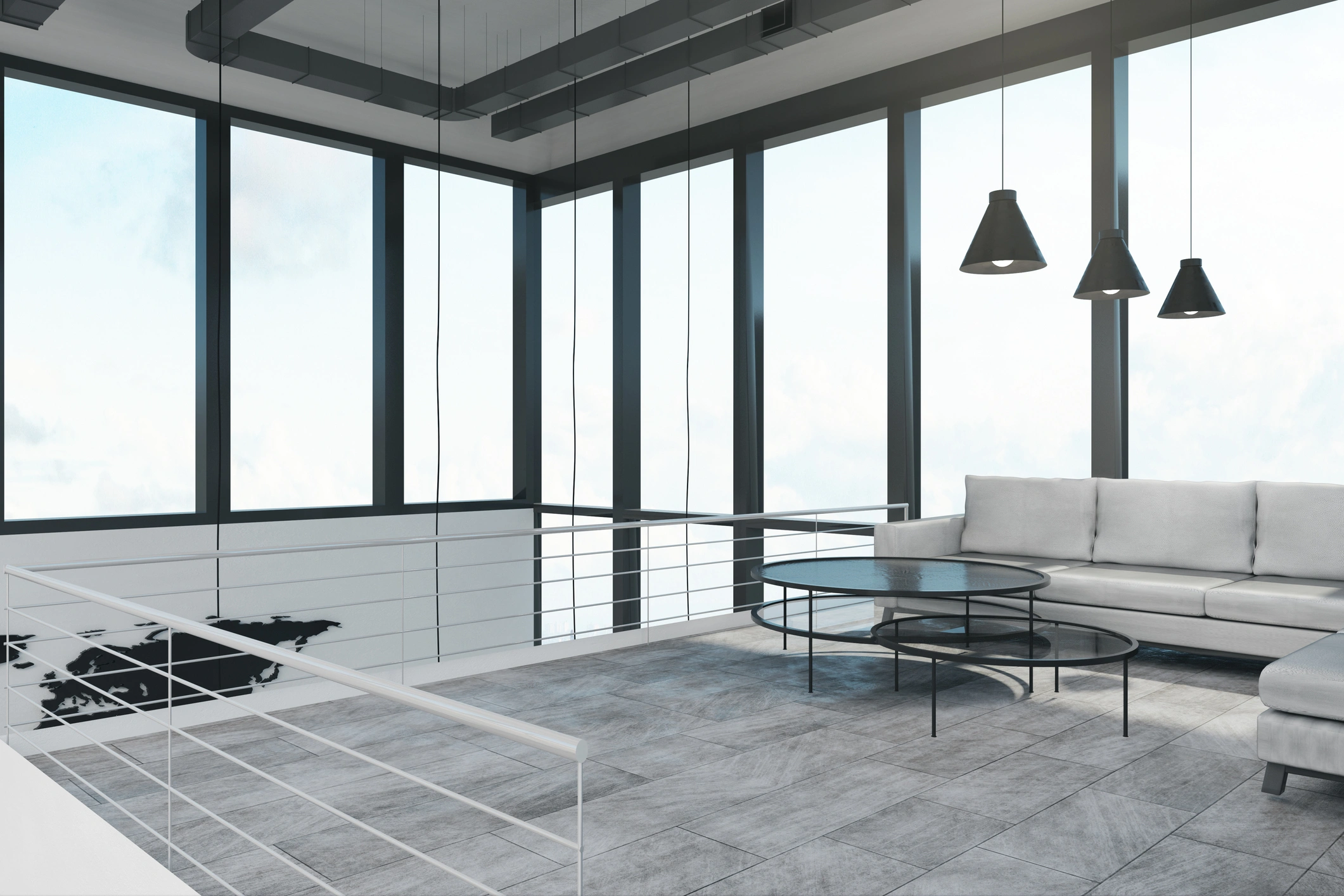
Window walls are expansive glass installations that span from floor to ceiling, creating a seamless connection between indoor and outdoor spaces. They offer unobstructed views, natural light, and a modern, open aesthetic while enhancing energy efficiency.
Key Specifications:
Transform your entrance with custom window walls, offering a stunning blend of style and functionality. Enjoy expansive views, natural light, and a modern design tailored to your space.
Select from aluminum, steel, wood, or composite frames, each offering different aesthetic and functional benefits.
Choose from clear, tinted, frosted, or low-E glass for varying levels of transparency, privacy, and energy efficiency.
Tailor the height, width, and layout of the window wall to fit your space, including options for fixed, operable, or sliding sections.
Customize glass edges with polished, beveled, or flat finishes for a refined look.
Create unique architectural features with corner, angled, or curved window wall designs.
Include vents or operable sections within the window wall for natural airflow.
We use only the best materials, offering durable, energy-efficient, and aesthetically pleasing window walls.
We provide fully customized window wall solutions tailored to your specific needs, preferences, and architectural requirements.
Our portfolio of successful projects and satisfied clients speaks to our commitment to excellence and reliability.
We prioritize your satisfaction, offering personalized service and tailored solutions to ensure you get exactly what you want.
Window walls are installed between floor slabs, acting as individual units, while curtain walls are hung outside the structural frame, covering multiple floors. Window walls are typically easier to install and offer more flexibility in design.
Window walls are highly durable, made from strong materials like aluminum and tempered glass. They are designed to withstand weather conditions, resist corrosion, and provide long-term performance with minimal maintenance.
Window walls can significantly impact indoor temperature by allowing natural light and heat into the space. When equipped with energy-efficient glazing, they help maintain a stable indoor temperature, reducing heating and cooling costs.
Yes, window walls can provide effective noise reduction, especially when using double or triple glazing. The glass and frame materials can be customized to enhance acoustic insulation, making them ideal for noisy environments.
Yes, window walls can be retrofitted into existing buildings. They offer a flexible solution for modernizing a building’s appearance and improving energy efficiency without requiring significant structural changes.

Unitized curtain wall guide: meaning, pros/cons, details, performance, install steps, QA/QC, and sourcing checklist—based on APRO factory experience.

Standard unitized curtain wall sizes explained: module width/height, frame depth, IGU thickness, joint sizing, tolerances, and case-based sizing plans.

Learn curtain wall glass types and uses: IGU vs laminated vs tempered, Low-E benefits, safety needs, and spec tips for projects

Learn what glass is, how it’s made, and how to choose: tempered, laminated, IGU, Low-E, VLT/SHGC/U-value, plus PO spec tips.

Learn its core definition, key components, performance metrics, drainage/weep details, and how it differs from curtain wall—so you can specify with confidence.

storefront vs window wall explained with clear pros/cons, costs, leak risks, and selection tips—use our decision framework to choose the right system today.
WhatsApp us