
Aluminum Panel Exterior Wall

Aluminum Panel Exterior Wall solutions for modern façades—custom sizes, finishes, and optional perforations, engineered for wind load, water management, and long-term durability.
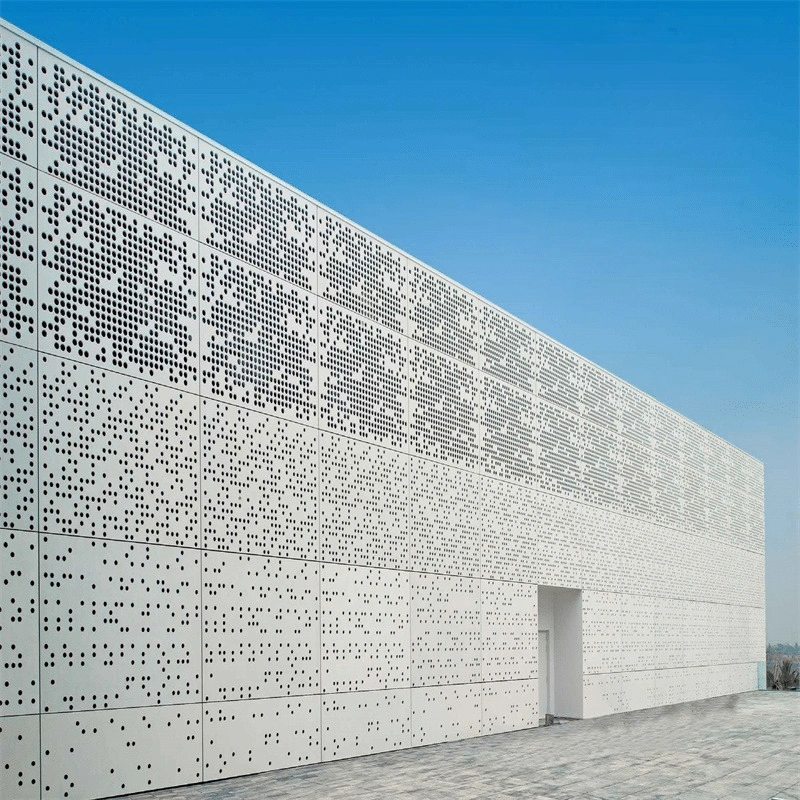
Aluminum panel curtain wall for building facade

What is A Aluminum Panel Exterior Wall?

An aluminum panel exterior wall is an exterior cladding system where aluminum panels are installed on a supporting frame or substrate to form the building’s outer skin. It’s typically non-structural (non-load-bearing)—the building’s structure carries the loads—while the aluminum panels provide weather protection, a finished architectural appearance, and optional insulation/acoustic performance.

Test data for aluminum panels

Category Test Item Test Content Technical Requirements
Geometry Size Length and Width Dimensions ≤ 2000mm: allowable deviation ±1.0mm
> 2000mm: allowable deviation ±1.5mm
Geometry Size Diagonal Line ≤ 2000mm: allowable deviation ±2.0mm
> 2000mm: allowable deviation ±3.0mm
Geometry Size Planeness Allowable deviation ≤ 1.5mm/1.5m
Fluorocarbon Coating Average Dry Film Thickness Two-coat > 30μm
Three-coat > 40μm
Four-coat > 55μm
Fluorocarbon Coating Chromatism Color difference testing with a colorimeter: ΔE < 2NBS
Fluorocarbon Coating Glossiness Error of limit value ± 5
Fluorocarbon Coating Pencil Hardness ≥ 1H
Fluorocarbon Coating Dry Adhesion Grid drawing method, 100/100, Reach level 0
Fluorocarbon Coating Impact Resistance (Frontal Impact) 50kgf·cm (490N·cm), No cracks and no paint peeling
Fluorocarbon Coating Chemical Resistance Resistant to hydrochloric acid 15 minutes of intravenous drip, no bubbles
Fluorocarbon Coating Chemical Resistance Resistant to nitric acid Color change: ΔE < 5NBS
Fluorocarbon Coating Chemical Resistance Resistant mortar There was no change for 24 hours
Fluorocarbon Coating Chemical Resistance Resistant Detergent There were no bubbles or peeling after 72 hours
Fluorocarbon Coating Corrosion Resistance Moisture-resistant 4000 hours, Reach GB1740 Level 2 or above
Fluorocarbon Coating Corrosion Resistance Salt spray resistance 4000 hours, Reach GB1740 Level 2 or above
Fluorocarbon Coating Weather Fastness Colour fading Ten years later, ΔE ≤ 5NBS
Fluorocarbon Coating Weather Fastness Chalking Ten years later, GB1766 level 1
Fluorocarbon Coating Weather Fastness Luster retention Ten years later, retention > 50%
Fluorocarbon Coating Weather Fastness Film thickness loss Ten years later, Film thickness loss < 10%

Create Your Perfect Entrance with Custom Aluminum Panel Exterior Wall System

Design a welcoming façade with a aluminium panel facade—clean lines, solid structure, and tailored glazing for bright, open entrances.

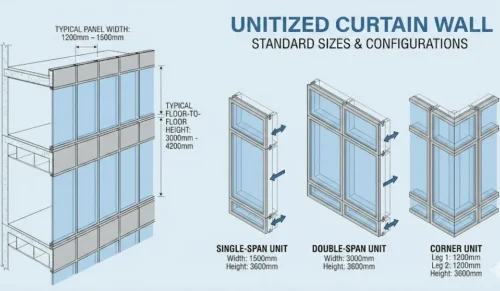
Size Customization

Customize height, width, and module layout to match your opening and façade grid—available in fixed, operable, or sliding configurations.

Shape Customization

Customize perforation patterns, hole sizes, and open-area ratios to control daylight, ventilation, and visual privacy—while matching your façade geometry.

Customized Aluminum Profiles

Specify profile sections, finishes, and colors to meet structural requirements and deliver the exact look your project demands.

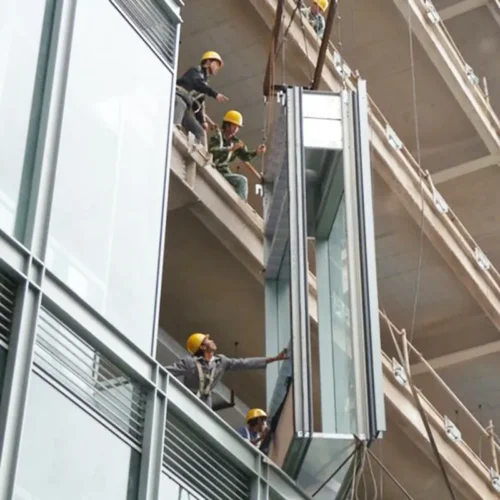
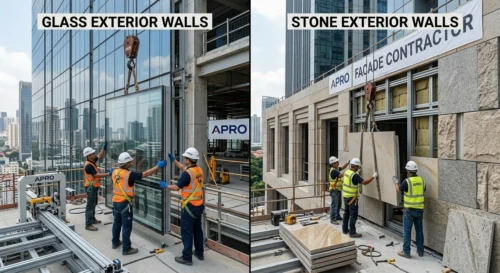
How To Install Aluminum Panel Exterior Wall

Installing a Aluminum Panel Exterior Wall requires precision for seamless design and optimal structural performance.

Survey & Setting Out

Verify substrates, slab edges, and datum lines; mark façade grid, levels, and bracket locations to control alignment.

Install Anchors & Brackets

Fix anchors/chemical bolts and adjustable brackets to the structure; check spacing, torque, and pull-out requirements.

Erect Sub-Frame System

Install vertical mullions/rails and secondary members; plumb and level to form a stable plane for panel mounting.

Install Insulation & Fire-Stopping

Place insulation boards, air/vapor barrier (if specified), and fire barriers at floor lines; seal gaps per project details.

Panel Preparation & QC Check

Confirm panel ID, dimensions, finish, edges, and cut-outs/perforations; keep protective film on and avoid surface damage.

Mount Aluminum Panels

Hang panels using the specified fixing method (hook-on/clip/screw/rivet); maintain consistent joint width and panel flatness.

Seal Joints & Add Flashings

Install gaskets/sealant, flashings, and drip edges; ensure drainage paths and ventilation cavities remain unobstructed.

Final Inspection & Cleaning

Check alignment, fasteners, joint uniformity, and water-tight detailing; remove film, clean surfaces, and complete handover records.

Applications of Aluminum Panel Exterior Wall

A Aluminum panel exterior wall offers a sleek and modern appearance for various applications, enhancing both the aesthetics and functionality of the structure.

Large Shopping Mall

Use an Aluminum single-panel exterior wall system to achieve a weather-resistant mall façade with consistent joints, easy maintenance, and design flexibility.

office Building

Ideal for office towers—our Aluminum single-panel exterior wall system delivers crisp façade lines, long-term durability, and flexible panel finishes for a premium corporate look.

Retail Spaces

For premium retail façades, the Aluminum single-panel exterior wall system enables smooth curves, bold forms, and refined finishes with clean, consistent joints.

Our Project

FAQs Related to Aluminum panel exterior wall

Aluminum panel systems are opaque cladding (often with insulation behind), while glass curtain walls are transparent glazing systems focused on daylight and views.

Yes. Perforation patterns, hole sizes, and open-area ratios can be customized for shading, ventilation, privacy, and façade texture—while still meeting structural needs.

Typical aluminum panel thickness is chosen based on wind load, panel size, and flatness requirements. Larger panels and higher wind zones usually require thicker panels or reinforcement.

Common options include PVDF/FEVE coating, powder coating, anodized-look, brushed, and metallic finishes, with custom color matching (e.g., RAL/Pantone) available.

Most aluminum panel façades work as a rainscreen: water is managed by joints, flashings, gaskets/sealants, and drainage paths rather than fully “sealed” panels.

Lead time varies by finish, perforation complexity, and quantity. Shop drawings approval and sample confirmation usually impact the schedule the most

Elevation drawings, panel layout/module size, project location (wind zone), finish/color, perforation requirements, insulation/fire targets, and preferred installation method.

Voices Of Trust: Real Customer Testimonials

Lasted Insights From Our Experts

en_USEnglish

Request A Quote From Our Experts Today!