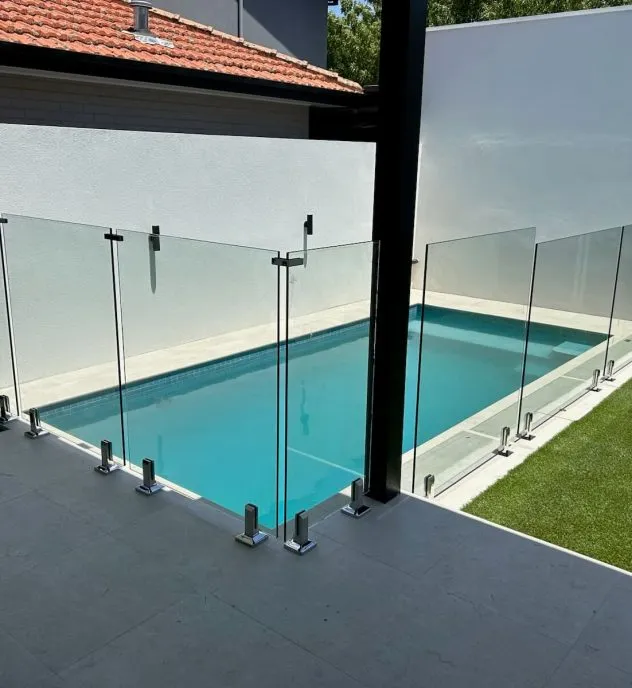
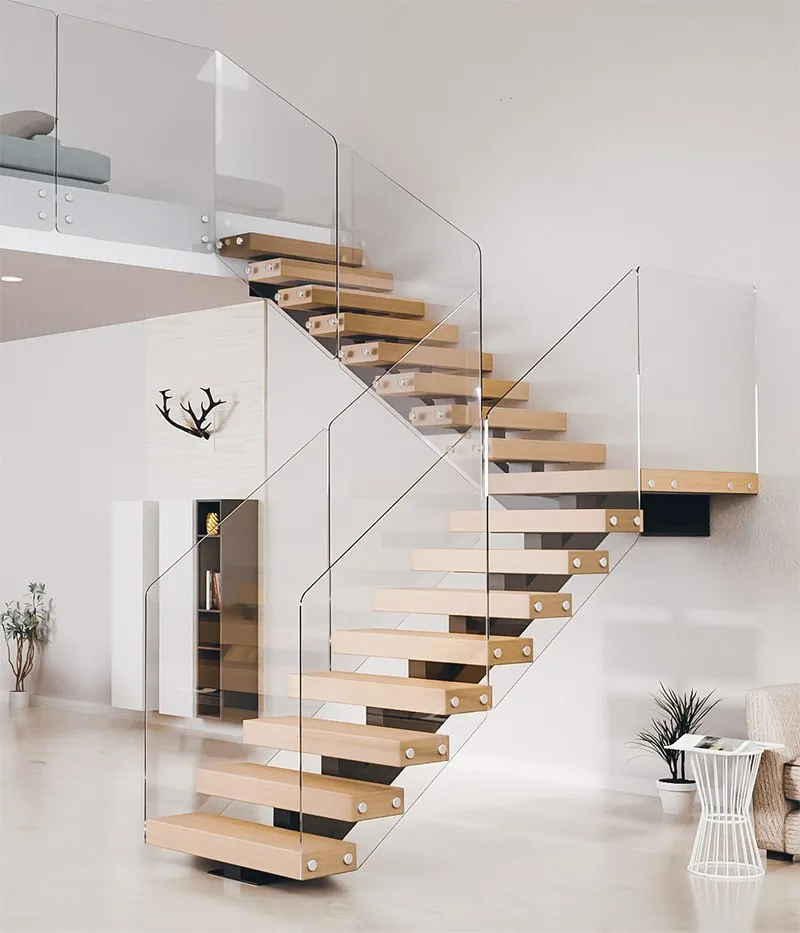

A semi-frameless glass railing is a guardrail system where the glass panels are mostly unobstructed, but they’re held and reinforced by minimal metal supports—typically small posts, clamps. Commonly used in Balconies, staircases, terraces, pool fences, and commercial guardrails.
A semi-frameless glass railing is supported by key fittings such as glass clamps, connectors, and end caps, providing stable mounting, clean alignment, and a refined appearance.
Protect railing ends and provide a clean, finished look.
Join handrail sections seamlessly for a continuous line.
Support posts securely by anchoring them to the ground
Installing a Semi-frameless glass railing follows a clear, step-by-step workflow to ensure secure fixing, proper alignment, and a clean finished look.
Follow the steps below for a safe, successful installation:
Mark the spots where posts will be installed precisely.
Secure the post base plates firmly to the deck or floor.
Position and fasten the posts to the base plates securely.
Fasten the horizontal rails between posts, ensuring level alignment.
Place balusters or panels into the slots between rails.
Attach handrails and end caps, completing the railing installation.
Not sure where to use Semi-framed glass guardrail?
Explore common applications below, then send your drawings to get a recommended configuration and quick quote.
Frameless systems usually have no visible posts (often base-shoe supported), while semi-frameless systems use minimal hardware such as posts or clamps for added structure and easier installation.
Most systems use tempered glass or laminated tempered glass. Laminated options are often preferred for higher safety requirements and certain applications.
Yes. With correct post spacing, anchors, and glass thickness, they can be designed to handle wind loads and outdoor exposure.
They’re primarily designed for visibility and openness. For privacy, options include frosted/gradient film, tinted glass, or decorative interlayers.
High-quality glass won’t yellow. Cloudiness is usually from mineral deposits or residue—regular cleaning and proper drainage details help prevent buildup.
Yes, they’re popular around pools for clear views and corrosion-resistant hardware options. Always confirm local pool barrier code requirements.
It depends on your design goal, site conditions, and budget: posts are robust and straightforward; clamps can reduce visual bulk; base channels create a cleaner “near-frameless” look.
WhatsApp us