
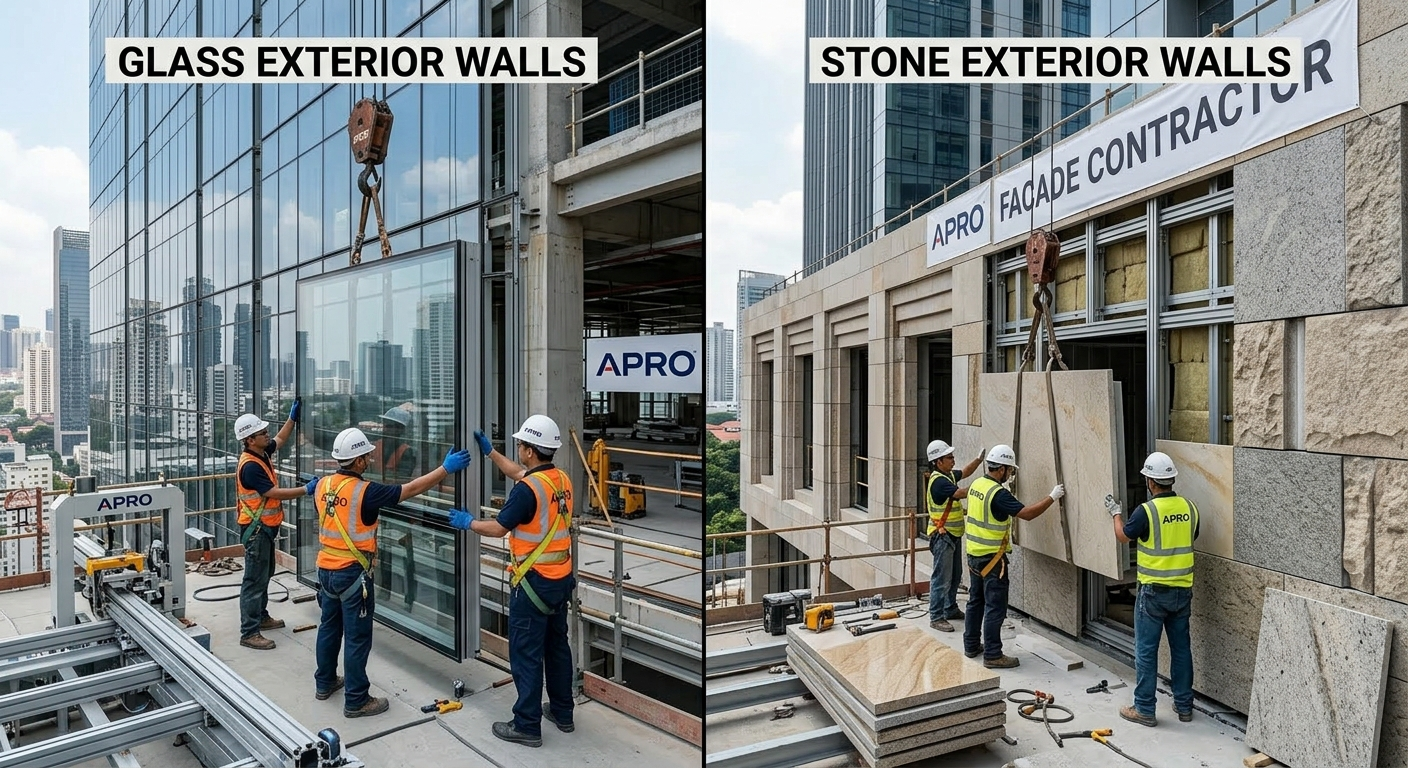

🏙️ The Great Facade Debate: Glass Curtain Wall vs Stone exterior walls
Designing the facade of a modern high-rise or a luxury commercial building is arguably the most critical architectural decision a developer will make. It dictates not only the aesthetic identity of the structure but also its structural integrity, thermal performance, and long-term financial viability.
🔍 Engineering Realities
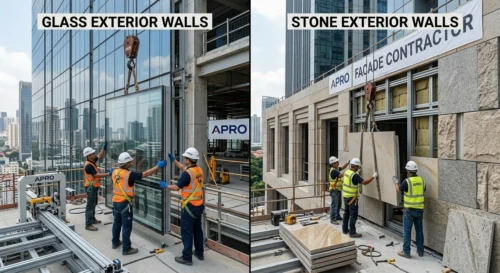
When architects and builders stand at the crossroads of facade engineering, the debate almost always boils down to two heavyweight contenders: the modern, transparent brilliance of a glass curtain wall and the timeless, imposing permanence of stone exterior walls.
“Choosing between them involves rigorous calculations of wind loads, seismic movements, energy consumption models, and massive budget considerations.”
Both systems have redefined skylines across the globe. One reflects the sky, embracing natural light and cutting-edge aluminum engineering; the other grounds the building, projecting power, heritage, and undeniable mass.
In this comprehensive guide, we will strip away the marketing jargon and dive deep into the engineering realities across nine uncompromising dimensions.
📌 Quick Summary for Decision Makers
💎 Option A: Glass Curtain Wall
Choose this if your project demands maximum daylighting, lightweight structural load, rapid unitized installation, and a sleek, contemporary aesthetic. Perfect for high-rise commercial office buildings.
🏛️ Option B: Stone Exterior Walls
Choose this if your architectural vision requires unparalleled durability, classic monumental aesthetics, superior acoustic insulation, and high thermal mass. Ideal for luxury podiums, government buildings, and high-end residential villas.
🏢 What is a Glass Curtain Wall?
To make a sound architectural decision, we must first address the foundational question: what is a glass curtain wall in the context of modern engineering?
📖 The Architectural Definition
A glass curtain wall definition goes far beyond just “a wall made of glass.” According to architectural standards, it is defined as a non-structural, non-load-bearing exterior envelope of a building, completely suspended from the concrete or steel floor slabs of the main building structure.
Because it does not carry the dead load weight of the building itself (other than its own weight and environmental wind/snow loads), it can be constructed using lightweight materials. You can explore the historical evolution of this system on Wikipedia’s comprehensive entry on Curtain wall (architecture).
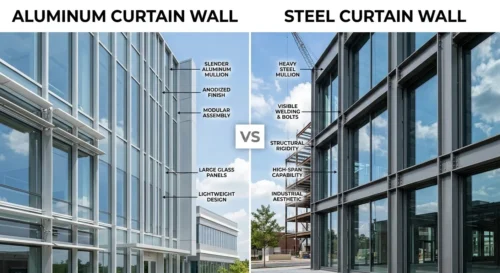
The primary framework is almost universally extruded aluminum, combined with highly engineered insulating glass units (IGUs). The goal is to create a seamless barrier that keeps weather out while allowing maximum natural daylight in.
🏗️ What Are the Glass Curtain Wall Types?
💡 Understanding the glass curtain wall types is essential because the type you choose dictates your installation speed and budget. (For a deep dive into engineering specs, check our 2026 Guide to Curtain Wall Systems).
1. Sistema construido con palos

In this traditional method, the aluminum mullions (vertical) and transoms (horizontal) are installed piece by piece directly onto the building structure on-site. Then, the glass panels are glazed into the frame from the outside. It is highly customizable and cost-effective for low-rise buildings or facades with complex, angular geometries, but it requires extensive on-site scaffolding and labor.
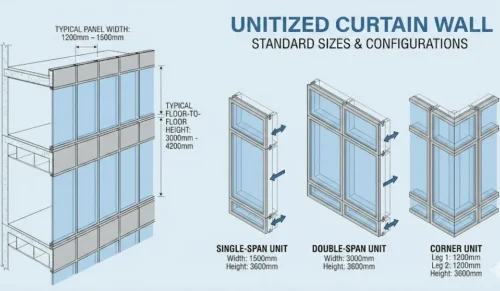
2. Sistema unificado
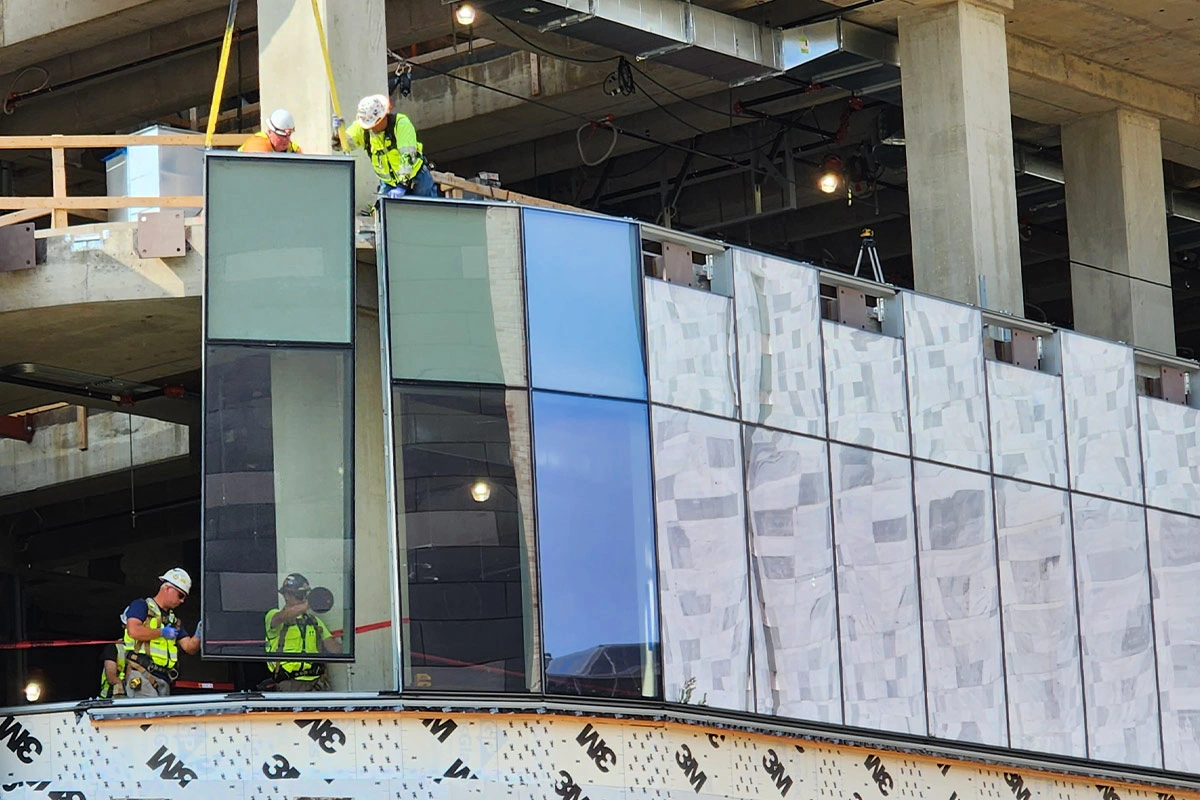
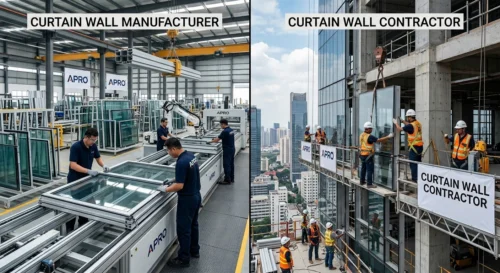
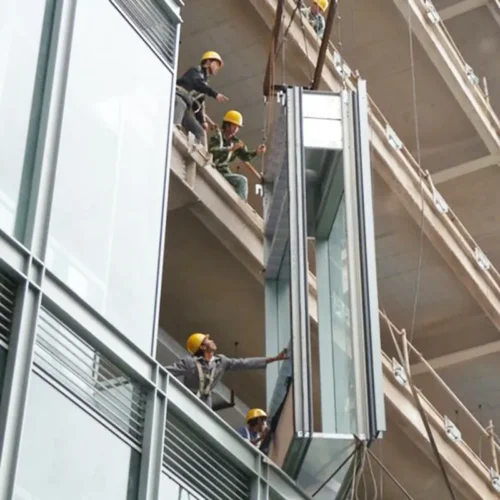
This is the pinnacle of modern skyscraper engineering. Large panels (spanning one or two floors in height) are entirely assembled, glazed, and sealed within a climate-controlled factory environment. These massive finished units are then transported to the site and hoisted onto the building using cranes, interlocking perfectly with one another. This guarantees exceptional quality control and lightning-fast installation.
3. Point-Supported / Spider Glass System
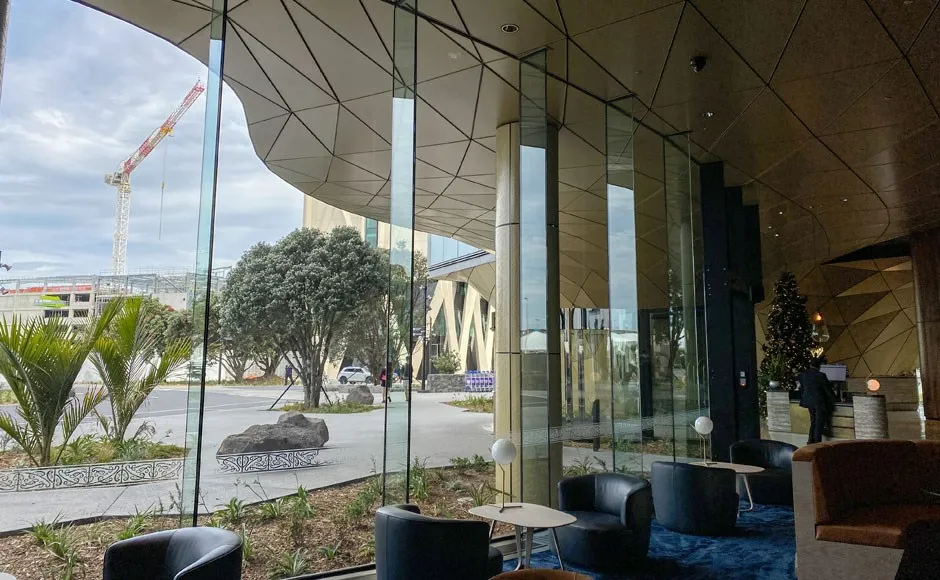
Utilizing stainless steel spider fittings and tension cables, this system eliminates aluminum frames entirely, offering ultimate transparency. It is typically used for dramatic ground-floor lobbies and luxury retail storefronts.
✅ Advantages of Glass Curtain Walls
Unmatched Daylighting and Aesthetics
They flood interior spaces with natural light, visually expanding the room and creating a modern, sleek appearance that reflects the surrounding cityscape.
Lightweight Engineering
Aluminum and glass are significantly lighter than masonry or solid stone. This drastically reduces the dead load transferred to the building’s foundation, allowing for taller structures and savings on structural steel and concrete.
Rapid Installation (Unitized)
Because unitized systems are pre-assembled in the factory, on-site construction time is slashed by up to 50%, allowing the building to be enclosed and interior work to begin much faster.
Advanced Thermal Control
Modern thermal break technologies and Low-E (Low Emissivity) argon-filled glass units provide excellent insulation, meeting stringent modern building codes.
❌ Disadvantages of Glass Curtain Walls
High Solar Heat Gain
In tropical or desert climates, extensive glass can act like a greenhouse, significantly increasing air conditioning costs if improper glass specifications (like lacking a low solar heat gain coefficient) are chosen.
Maintenance and Cleaning Requirements
To maintain their pristine look, glass facades require frequent cleaning by professional abseiling teams or automated building maintenance units (BMUs), increasing long-term operational costs.
Acoustic Vulnerability
While double-glazing helps, standard glass walls do not block heavy city traffic noise as effectively as a thick, solid mass wall.
🏛️ What are Stone Exterior Walls?
📖 The Architectural Definition
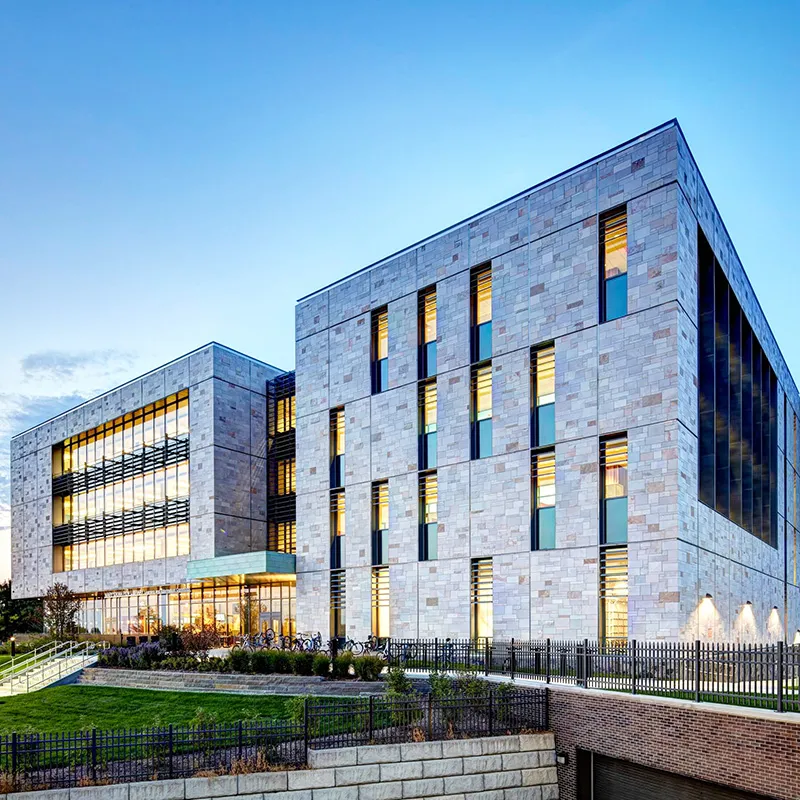
When we discuss stone exterior walls, we are referring to the use of natural or engineered stone as the primary cladding material for a building’s facade. Historically, stone walls were load-bearing—thick, massive structures that held the building up. Today, modern engineering employs stone cladding: relatively thin layers of stone mechanically anchored to the building’s structural backup walls.
This category encompasses a massive variety of applications. Designers might specify heavy granite blocks for a corporate headquarters, sleek limestone exterior stone wall panels for a museum, or rustic stone veneer for exterior walls for a high-end residential project. Whether you are using solid dimension stone or a lightweight decorative stone wall exterior, the intent is to convey stability, permanence, and organic beauty.
✅ Advantages of Stone Exterior Walls
Extreme Durability and Longevity
Stone is a geological survivor. Granite and basalt can withstand centuries of extreme weather, UV radiation, and freeze-thaw cycles without degrading.
Timeless Monumental Aesthetics
Nothing replicates the natural veining, texture, and gravitas of a stone facing for exterior walls. It projects an image of wealth, heritage, and uncompromising quality.
Exceptional Thermal Mass
Stone absorbs heat slowly during the day and releases it slowly at night. This thermal mass effect naturally regulates interior temperatures, reducing the strain on HVAC systems.
Superior Acoustic Insulation
The sheer density and mass of stone for walls exterior block out external noise pollution far better than standard glass, making it ideal for luxury hotels or residences in noisy urban environments.
❌ Disadvantages of Stone Exterior Walls
Massive Dead Weight
Natural stone is incredibly heavy. Using solid stone wall panels exterior requires a significantly reinforced building structure and a robust foundation, driving up the initial structural costs of the project.
Slower, Labor-Intensive Installation
Hanging heavy stone panels requires specialized lifting equipment, complex stainless steel anchoring systems, and highly skilled stonemasons working piece by piece on-site.
Risk of Seismic Dislodgment
In earthquake-prone zones, heavy stone panels must be engineered with complex, flexible mechanical anchors to prevent them from shearing off during a seismic event, adding severe engineering complexity.
Higher Initial Cost
High-quality natural stone, combined with the expensive labor and structural reinforcements required, makes it one of the most expensive facade options available on the market today.
📊 Quick Comparison: Glass Curtain Wall vs Stone Exterior Walls
| Comparison Metric | Glass Curtain Wall | Stone Exterior Walls |
|---|---|---|
| Appearance & Aesthetics | Modern, sleek, reflective, and highly transparent | Classic, monumental, textured, and solid |
| Material Composition | Aluminum frame, Low-E tempered glass, structural silicone | Natural granite, limestone or marble panels with stainless steel anchors |
| Common Applications | High-rise office buildings, commercial towers, retail storefronts | Luxury villas, government buildings, museums, commercial podiums |
| Eficiencia energética | Depends on Low-E coatings and thermal break technology | Excellent thermal mass and natural insulation |
| Durability & Lifespan | Usually 30–50 years, sealants may need replacement | Often 100+ years with proper maintenance |
| Safety & Security | Tempered or laminated glass prevents dangerous shattering | Strong impact resistance but requires proper anchoring |
| Installation Speed | Very fast, especially with unitized curtain wall systems | Slower installation due to heavy panels and manual work |
| Comparación de costos | Moderate to high depending on glazing technology | Generally high due to material weight and installation labor |
| Mantenimiento | Requires regular cleaning and sealant inspection | Low maintenance, occasional cleaning only |
✨ Appearance & Aesthetics
Glass curtain walls: The aesthetic of glass is all about dematerialization. It makes massive towers look weightless, reflecting the shifting clouds and sunsets. It represents the pinnacle of modern corporate identity. Architects love the ability to use different glass tints, fritted patterns, and spandrel glass to create a monolithic, continuous skin that blurs the line between the indoor and outdoor environment.
Stone exterior walls: Stone is the ultimate expression of permanence. Whether it’s a deeply textured exterior stone accent wall or a polished granite facade, it communicates heritage. The organic veins in natural stone mean that no two panels are exactly alike, offering a rich, tactile depth that glass simply cannot replicate. It anchors a building to the earth.
🧱 Material Composition
Glass curtain walls:This is an exercise in precision engineering. The system relies on 6063-T5 or T6 architectural-grade aluminum extrusions, separated by polyamide thermal strips. The infill is typically double or triple-glazed IGUs featuring argon gas and advanced metallic Low-E coatings. The invisible hero holding it all together is the structural silicone sealant, which must resist decades of UV rays and wind shear.
Stone exterior walls: The material palette here is forged by nature. Granite, limestone, travertine, and sandstone are cut into slabs (usually 30mm to 50mm thick for commercial cladding). To attach these to the building, engineers use heavy-duty stainless steel (304 or 316 grade) undercut anchors, brackets, and support rails to create a ventilated cavity behind the stone.
🏢 Common Applications
Glass curtain walls: Walk into the central business district of any major metropolis (New York, Dubai, Shanghai), and you are surrounded by glass. It is the undisputed king of commercial high-rises. A world-famous example is the Burj Khalifa in Dubai, which utilizes a record-breaking amount of reflective glazing to withstand the Arabian desert heat while reaching into the stratosphere.
Stone exterior walls: Stone is typically reserved for structures that demand an aura of institutional authority or extreme luxury. You will see solid stone cladding on courthouses, national museums, central banks, and the podiums (the lower 3-5 floors) of luxury skyscrapers. In the residential sector, an exterior stone accent wall or a stone wall veneer exterior is incredibly popular for high-net-worth villas and estates.
⚡ Energy Efficiency
Glass curtain walls: This is the Achilles’ heel of poor glass design, but the triumph of modern engineering. Because glass is a poor insulator compared to solid mass, it relies heavily on technology. According to data standards published by the U.S. Department of Energy (DOE) on Building Energy efficiency, fenestration (windows and glazed facades) accounts for a massive portion of a building’s energy use. Therefore, we utilize thermally broken aluminum frames and silver-coated Low-E glass to reflect infrared heat back to the outside during summer, while keeping interior warmth contained during winter.
Stone exterior walls: Stone operates on the principle of thermal mass. A thick decorative stone wall exterior will absorb the intense heat of the midday sun, preventing it from immediately transferring into the building’s interior. As night falls and temperatures drop, the stone slowly radiates that absorbed heat. Furthermore, modern stone cladding is installed as a “rainscreen” system, leaving an air gap packed with thick mineral wool insulation, providing phenomenal overall R-values.
🛡️ Durability
Glass curtain walls: Aluminum does not rust, and glass does not degrade under UV light. However, the rubber EPDM gaskets and the structural silicone sealants have a finite lifespan (typically 20 to 30 years) before they begin to dry out and lose elasticity, requiring a very expensive re-caulking process. Furthermore, the system must endure immense wind pressures and the threat of water infiltration.
Stone exterior walls: Stone is almost immortal. It is completely immune to the UV degradation that affects sealants. However, certain porous stones (like limestone) can suffer from pollution staining or acid rain degradation in highly industrialized cities. The primary durability concern isn’t the stone itself, but the stainless steel anchors behind it; if inferior metal is used, hidden corrosion can lead to catastrophic panel failure decades down the line.
🏭 【(Expert Factory Experience #1): The Hurricane Deflection Challenge】
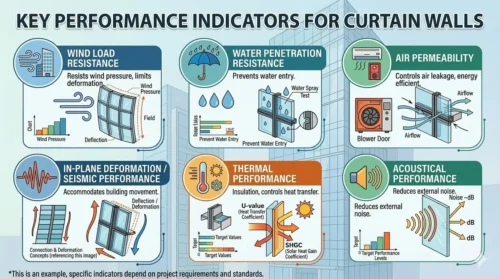
I will never forget a deeply frustrating, yet highly rewarding moment back in 2022. Our factory was manufacturing a customized unitized glass curtain wall for a 40-story beachfront project in Miami—a notorious hurricane zone. During our dynamic water penetration testing (strictly following the international standard AAMA 501.1 Standard Test Method for Water Penetration), we cranked up the airplane propeller engine to simulate 110 mph winds and blasted the mock-up with water.
The problem? We noticed a microscopic water droplet breaching the structural silicone joint on the interior side. The factory floor fell dead silent. It was a failure. Upon intense investigation, our engineers discovered that under extreme wind load, the standard 150mm aluminum mullion was experiencing a deflection (bending) of just 3 millimeters more than anticipated, causing the EPDM gasket to momentarily decompress.
Our solution? We immediately called the client via video conference, showed them the raw test data, and explained the catastrophic risk of a hurricane-season failure. We negotiated a structural upgrade: we redesigned the extrusion die to thicken the mullion web by 1.5mm and implemented a dual-sealed structural silicone system. It delayed our production schedule by exactly 6 days, but the client was blown away by our honesty and rigorous testing. The second mock-up passed flawlessly at 130 mph simulation. That is the reality of facade durability—it lives and dies by millimeter tolerances.
🔒 Security & Safety
Glass curtain walls: Modern building codes strictly require the use of safety glass. If a high-rise panel breaks, it must not shatter into deadly shards. Therefore, tempered glass (which shatters into harmless dull pebbles) or laminated glass (which holds together like a spiderweb via a PVB interlayer) is mandatory. To verify its strength, systems are rigorously tested against ASTM E330 (Standard Test Method for Structural Performance of Exterior Windows, Doors, Skylights and Curtain Walls by Uniform Static Air Pressure Difference). However, glass remains vulnerable to deliberate hard impacts or severe flying debris.
Stone exterior walls: In terms of blunt force trauma or ballistic security, thick natural stone is virtually impenetrable. The major safety concern with stone is seismic activity. Earthquakes cause buildings to sway and twist. If heavy stone wall panels exterior are rigidly fixed to the wall, the bending of the building will crack the stone or snap the anchors, sending hundreds of pounds of rock plummeting to the sidewalk. Thus, engineers must design sophisticated sliding anchor brackets that allow the stone panels to move independently of the building’s structural sway.
⏱️ Installation Speed
Glass curtain walls: For unitized glass systems, the installation speed is shockingly fast. Let’s walk through the process so you can feel the efficiency of the modern job site:
Step 1 (Embedment): While pouring the concrete floor slabs, steel embed channels are cast directly into the edge of the slab.
Step 2 (Bracket Installation): Surveyors use lasers to bolt adjustable aluminum anchor brackets into those steel embeds with millimeter precision.
Step 3 (Hoisting): A tower crane lifts a massive, fully finished 1.5m x 4m glass unit from the delivery truck straight up the side of the building.
Step 4 (Interlocking): Workers on the floor slab guide the unit. It slides down, its male/female mullion edges physically interlocking with the adjacent panel with a satisfying click.
Step 5 (Securing): The unit is bolted to the anchor bracket. No exterior scaffolding is needed. A skilled crew can install 30 to 40 panels in a single day, instantly weather-sealing an entire floor.
Stone exterior walls: Stone installation is an ancient craft modernized with steel, but it remains painstakingly slow.
🏗️ (Factory Experience): The Heavy Weight Dilemma
Working with heavy natural materials always brings unique, sweat-inducing challenges. Last year, a high-net-worth client approached us for a luxury commercial villa project. The architectural drawings called for massive 40mm thick solid granite stone facing for exterior walls.
The problem? When our structural engineering team calculated the total dead load of the stone, the numbers were terrifying. The existing steel skeletal structure of the client’s building was not designed to carry that much weight. The deflection on the perimeter beams would have been catastrophic. The client was devastated, thinking they had to abandon their dream of a classic, monumental stone facade and settle for painted aluminum.
Our solution? We convened an emergency engineering summit in our factory. Instead of solid rock, we engineered a custom solution using ultra-thin stone veneer for exterior walls (just 6mm of real granite) permanently bonded under extreme pressure and heat to a 20mm aerospace-grade aluminum honeycomb backing panel. We invited the client to our factory. I handed the client a massive 1m x 2m solid granite panel—it took three men to lift it. Then, I handed the client our engineered honeycomb stone panel. They lifted it with one hand. We reduced the dead weight by an astonishing 75% while maintaining the exact visual grandeur of solid stone. The project proceeded without needing structural reinforcement, saving the client hundreds of thousands of dollars in steel costs.
💰 Cost Comparison
Glass curtain walls: The cost per square meter varies wildly based on the glass specifications. A basic double-glazed stick system might be considered moderately priced. However, if you specify triple-glazed, argon-filled, double-silver Low-E glass in a unitized system with custom extruded fin profiles, the price skyrockets. Crucially, though, the lightweight nature of glass saves the developer massive amounts of money on the building’s foundation and steel framework.
Stone exterior walls: Generally, high-quality natural stone cladding is significantly more expensive upfront than standard glass. You are paying for the extraction of the stone from a quarry, the heavy freight shipping, the expensive stainless steel anchoring hardware, and the slow, highly skilled masonry labor required to install it. Furthermore, the building itself must be over-engineered to support the weight, adding hidden structural costs to the bottom line.
🛠️ Maintenance
Glass curtain walls: Glass demands attention. Urban pollution, rain spots, and dust accumulate quickly, ruining the transparent aesthetic. High-rise glass facades require professional cleaning at least 2 to 4 times a year. Furthermore, every 10 to 15 years, the exterior weather-seal caulking must be inspected and potentially replaced to prevent water ingress.
Stone exterior walls: Once a stone wall veneer exterior or solid panel is installed, it is essentially zero-maintenance for decades. Depending on the environment, it may require a gentle low-pressure chemical wash every 5 to 10 years to remove biological growth (like algae) or exhaust soot. You never have to worry about the stone “breaking down.”
🎯 How to Choose the Right Facade System?
After navigating through the deep engineering data, the question remains: which one do you choose for your specific project? Facade selection is never one-size-fits-all. It requires a strategic alignment of your architectural vision with your financial realities.
✅ When to Choose a Glass Curtain Wall?
You are building a High-Rise Commercial Office:
The lightweight nature of glass is mandatory for skyscrapers. It reduces structural costs and maximizes the rentable floor space.
Speed to Market is Critical:
If your developer is paying high interest on construction loans, the rapid installation of a unitized glass curtain wall allows the building to be occupied and generate rental income months faster than masonry construction.
Daylighting and Views are Premium Selling Points:
If your building overlooks the ocean, a park, or a spectacular city skyline, floor-to-ceiling glass maximizes the real estate value of the interior space. It creates the modern, transparent corporate identity that tech companies and financial firms demand.
✅ When to Choose Stone Exterior Walls?
You are Designing a Monumental or Civic Structure:
Museums, courthouses, embassies, and luxury flagship retail stores require an aesthetic of permanence, authority, and unshakeable wealth. Nothing delivers this psychological impact like heavy natural stone.
You are Building in a High-Noise Urban Environment:
The massive density of a thick stone wall provides unparalleled acoustic insulation, making it the superior choice for luxury hotels or high-end residential buildings located next to busy highways or train lines.
You Want a Zero-Maintenance Heritage Building:
If the goal is to build a structure that will stand for 100 years with minimal exterior upkeep, stone is the ultimate geological shield against the elements.
🏁 Conclusion
The battle between the glass curtain wall y stone exterior walls is a clash between modern technological efficiency and timeless geological permanence.
Glass offers us the sky—it is fast, lightweight, brilliantly luminous, and defines the modern metropolitan skyline.
Stone anchors us to the earth—it is heavy, enduring, deeply textured, and speaks of heritage and power.
As we’ve explored through rigorous engineering standards, factory testing realities, and cost analyses, the “best” material depends entirely on your project’s height, timeline, structural capacity, and architectural soul.
🚀 Are you ready to engineer your next landmark?
Don’t leave your facade performance to chance.
Contact our expert engineering team today to get a free, comprehensive project evaluation, customized CAD detail drawings, and a precise budget quotation.
💡 FAQ
🏢 What is the main difference between a glass curtain wall and a window wall?
A glass curtain wall is continuously hung on the outside of the building slabs, spanning multiple floors without interruption, offering superior water management and continuous aesthetics. A window wall sits between the concrete floor slabs, breaking the exterior aesthetic at every floor but generally costing less and allowing for easier installation from the inside.
🏛️ Can I combine stone and glass on the same building facade?
Yes, absolutely. This is a very common and highly recommended architectural strategy. Many luxury commercial towers use heavy, monumental stone exterior walls for the ground floor podium to project stability at the pedestrian level, and then transition to a sleek, lightweight glass curtain wall for the soaring tower above.
💧 How do you prevent a glass curtain wall from leaking water?
We utilize a multi-tiered defense strategy based on the rainscreen principle. The outer structural silicone acts as the first barrier. Inside the aluminum extrusion, we engineer pressure-equalized drainage chambers and weeping holes. If any water breaches the first seal, it is immediately channeled down and wept back out to the exterior, ensuring the building interior remains completely dry.
🌍 Are exterior stone wall panels safe in an earthquake?
Yes, provided they are engineered correctly. Solid stone panels are never rigidly bolted directly to the wall in seismic zones. They are installed using complex stainless steel undercut anchors and sliding tracks that allow the individual stone panels to shift and articulate independently, absorbing the kinetic energy of the earthquake without shattering.
💰 Which is more expensive: glass curtain walls or stone veneer for exterior walls?
Generally, high-quality natural stone cladding is more expensive regarding upfront material and highly skilled masonry labor. However, a highly customized, triple-glazed unitized glass system with custom extrusions can equal or exceed the cost of stone. Ultimately, glass saves money on the overall structural steel frame of the building due to its much lighter weight.


 Spanish
  English
  Arabic
  German
  French
  Italian
  Japanese
  Korean
  Portuguese
  Russian